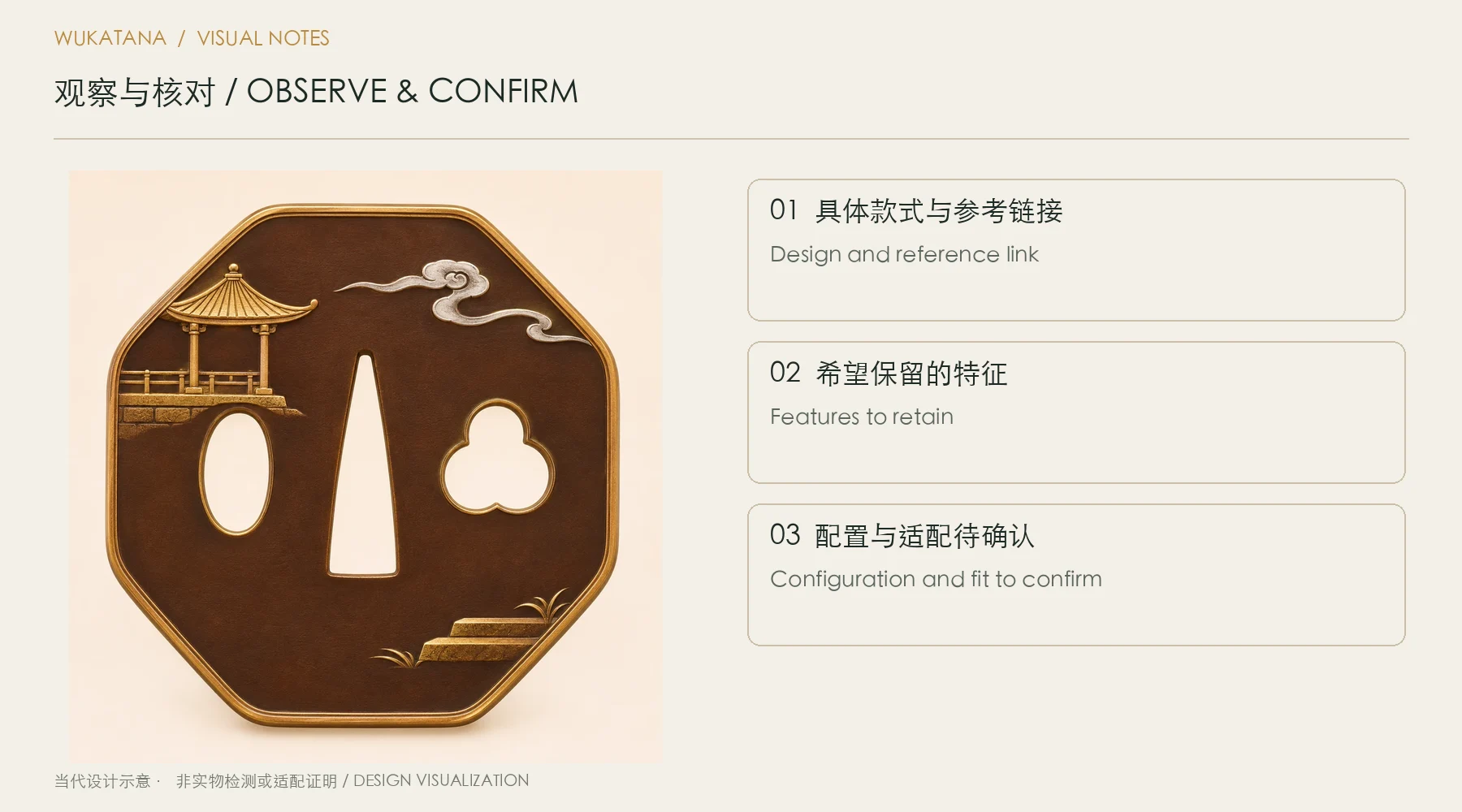
From Reference Image to Configuration: Eaves And Architecture At A Small Scale
To examine eaves and architecture at a small scale, begin with specific designs rather than a general style label. This article focuses on configuration notes, using Two Cloud Palaces · Cloud Terrace and Two Cloud Palaces · Moon Gate to distinguish visible clues from the information that needs a separate check.
Define the question for this comparison
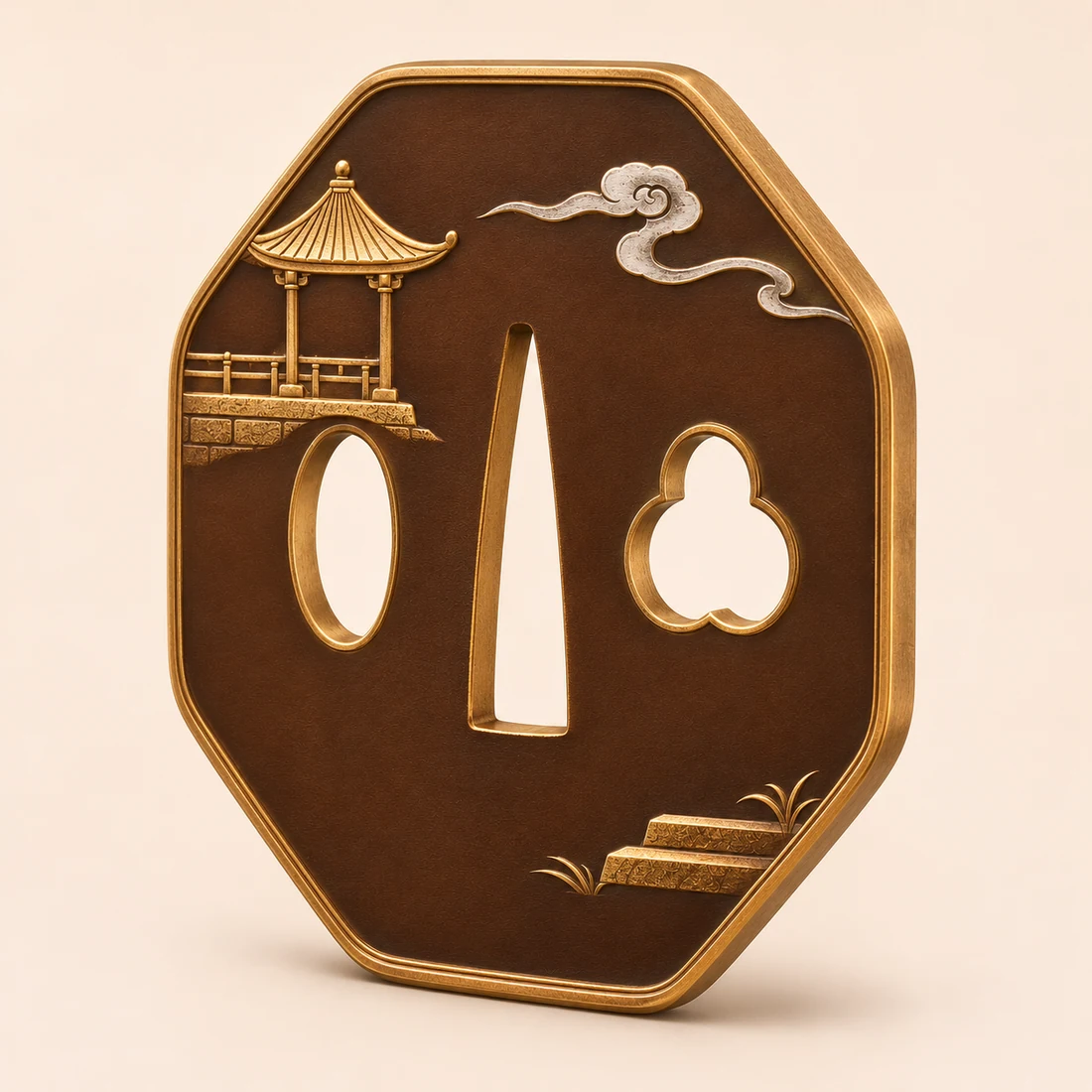
A reference image communicates a visual result; an order note needs to turn that result into checkable items. Separate the features to retain, the parts that may change, and the information still missing. This gives the discussion a more useful structure than sending an image without explaining why it was selected.
Small architectural subjects need not depend on many window grids. The relationship between roof layers, eaves, and base often explains the form more clearly than a dense accumulation of detail.
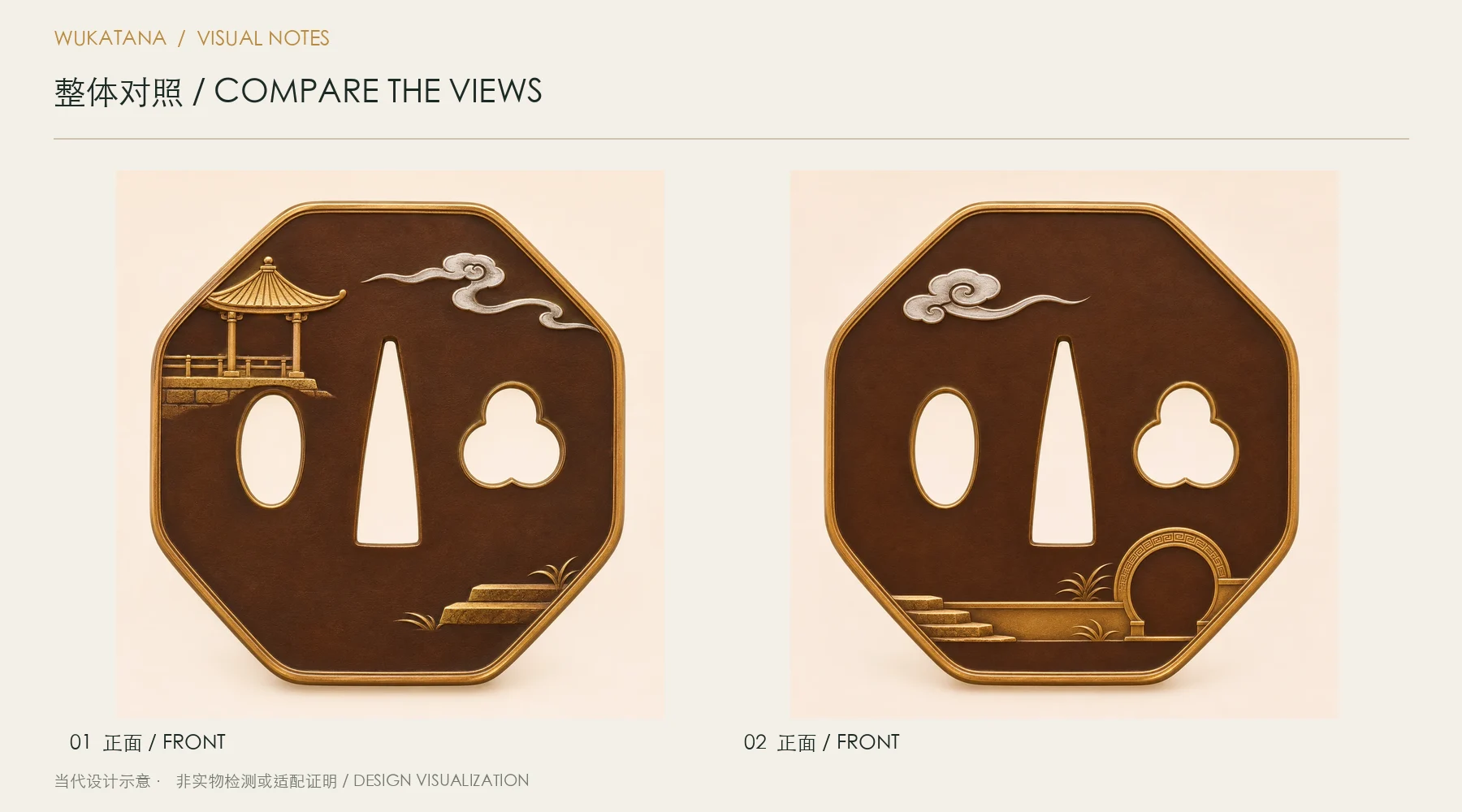
First example: Two Cloud Palaces · Cloud Terrace
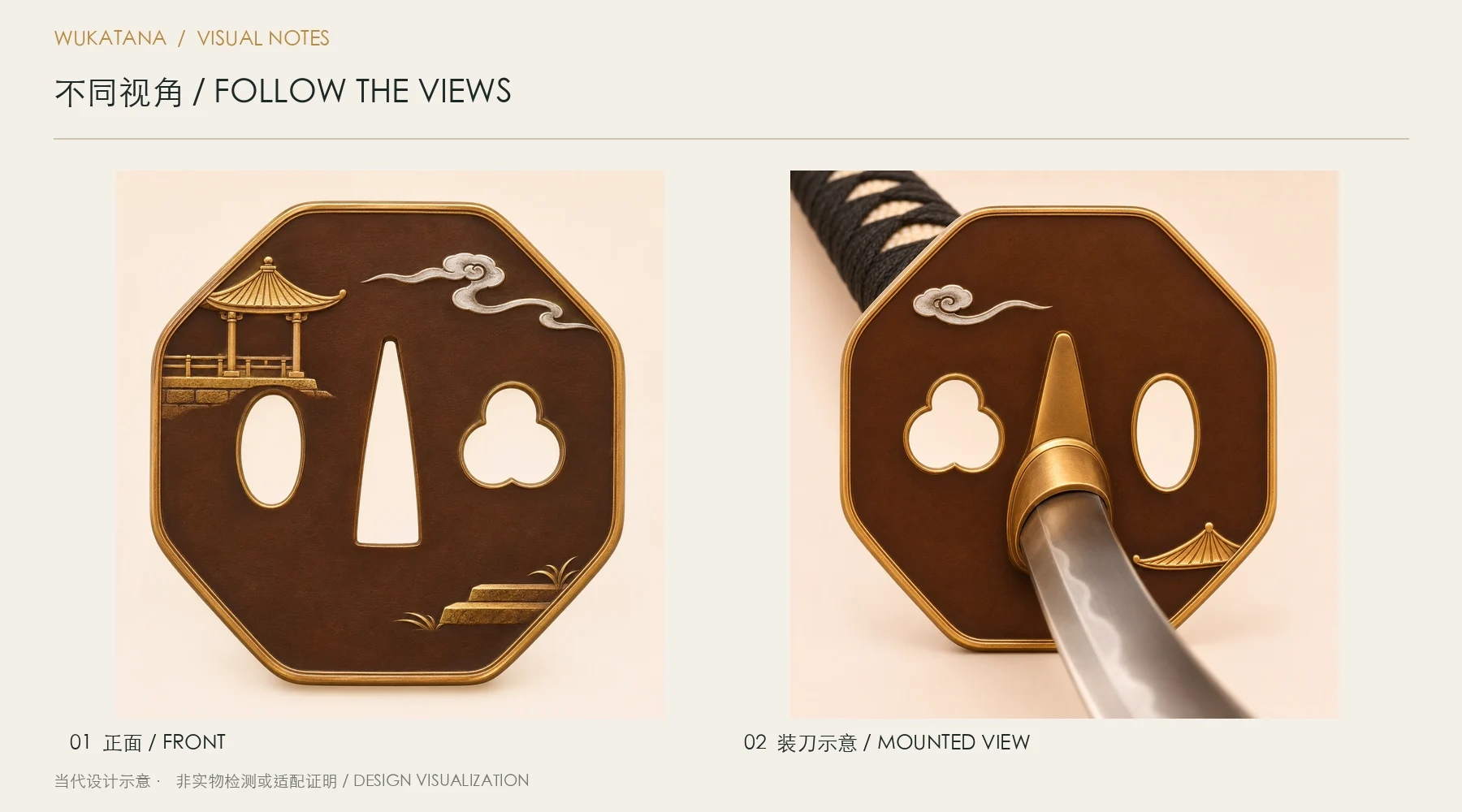
Two Cloud Palaces · Cloud Terrace is cataloged as colored brass, with rounded square or polygonal form and fine engraved lines, sculpted relief, restrained color contrast as its decorative approach.
Cloud gathers beside the eaves; a gateway rests within the frame. Two Cloud Palaces · Cloud Terrace uses colored brass. A small pavilion rests at the upper left, its columns and curved roof meeting a low terrace.
When using this design as a reference, specify whether the interest lies in its outline, organization of the motif, or color relationships. Include its name and link so both sides can identify the same design rather than confuse it with another option that happens to share a similar palette.
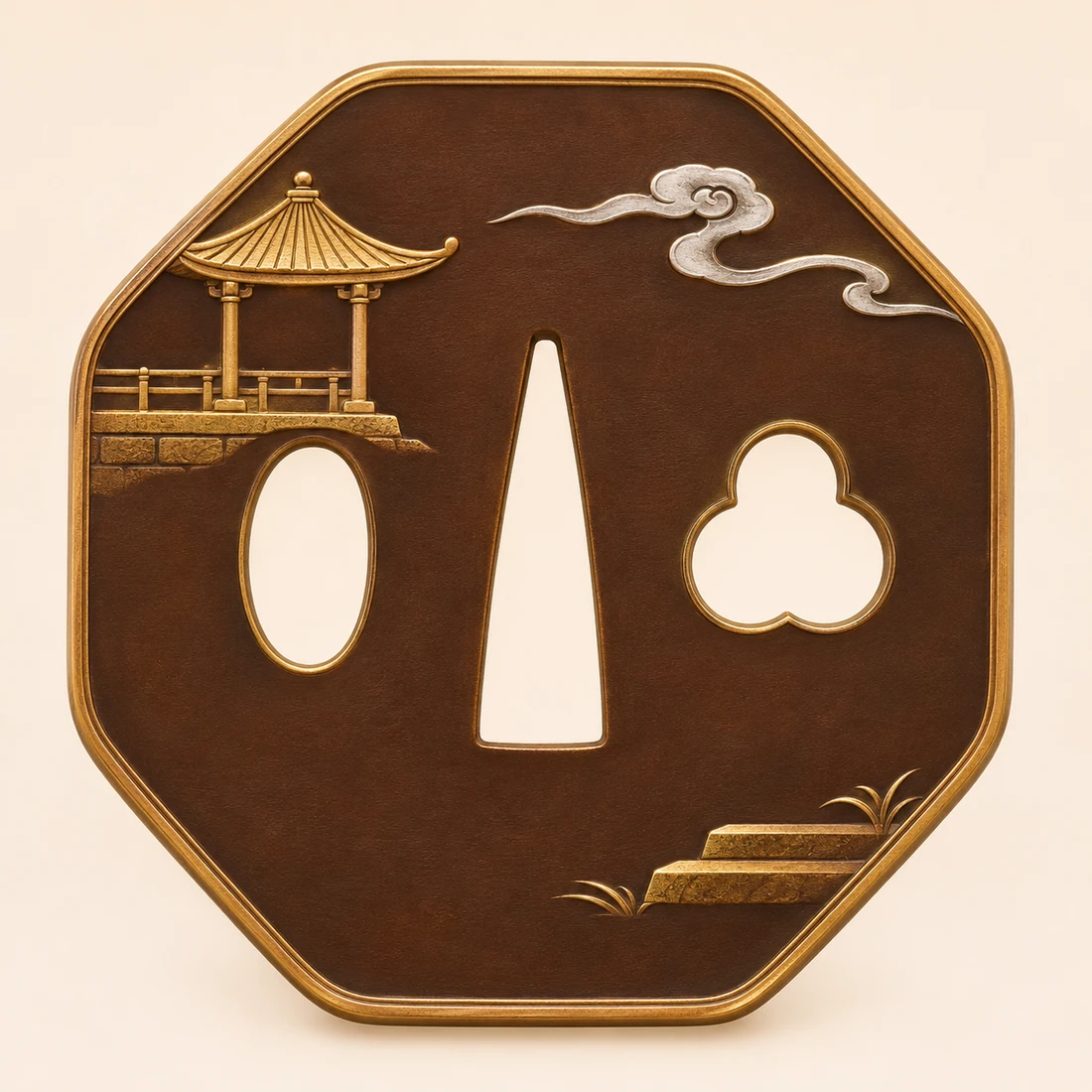
Second example: Two Cloud Palaces · Moon Gate
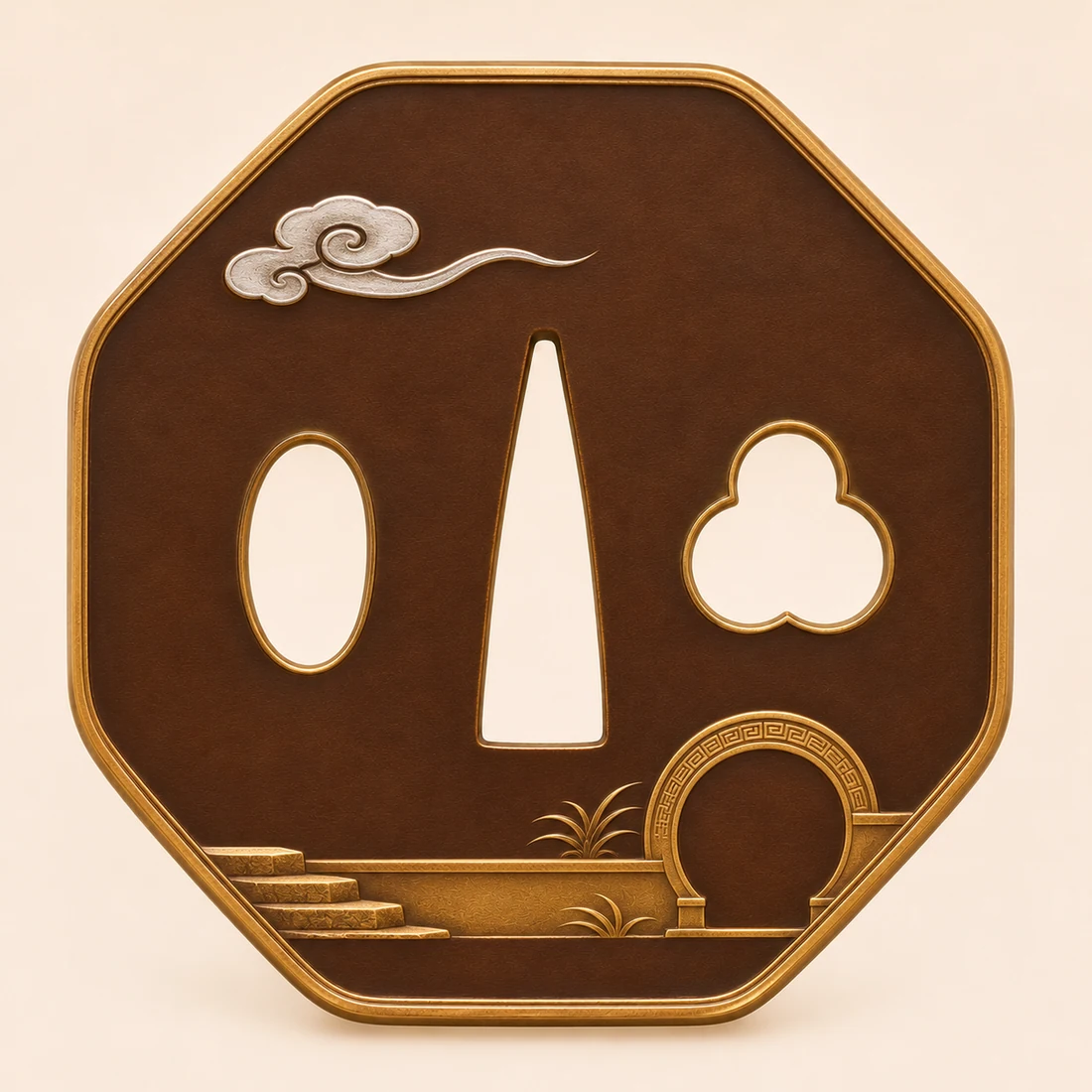
Two Cloud Palaces · Moon Gate is cataloged as colored brass, with rounded square or polygonal form and fine engraved lines, sculpted relief, restrained color contrast as its decorative approach.
Cloud gathers beside the eaves; a gateway rests within the frame. Two Cloud Palaces · Moon Gate uses colored brass. A circular gate motif rests at the lower right, joined by a low wall and three steps along the bottom.
Read Two Cloud Palaces · Moon Gate on its own terms before comparing it with the first example. Each design retains its cataloged material and composition. If material, outline, and subject change together, record those variables separately rather than attributing every visual difference to one factor.
Turn looking into a repeatable method
Read the outermost eave first, then check how clearly the layers separate and how much space remains between the building and surrounding cloud lines.
Identify the specific sword and guard first, then confirm available options, fitting information, and color requirements. Images cannot supply every measurement or replace the product’s selection rules. A displayed combination can explain its appearance, but actual compatibility still needs confirmation for the configuration being ordered.
Keep one clear outcome
For eaves and architecture at a small scale, make the record specific to the two designs: mark the first detail you notice in Two Cloud Palaces · Cloud Terrace, then identify a corresponding observation area in Two Cloud Palaces · Moon Gate. Describe the shapes and relationships first, followed by the preference or question that needs to be resolved.
A useful confirmation note can have four lines: selected designs, essential visual features, confirmed specifications, and remaining questions. Use the information confirmed for that order when recording price, stock, and delivery arrangements; an older article or screenshot is not an ongoing availability promise.