Choosing Brass, White Copper, or Colored Brass
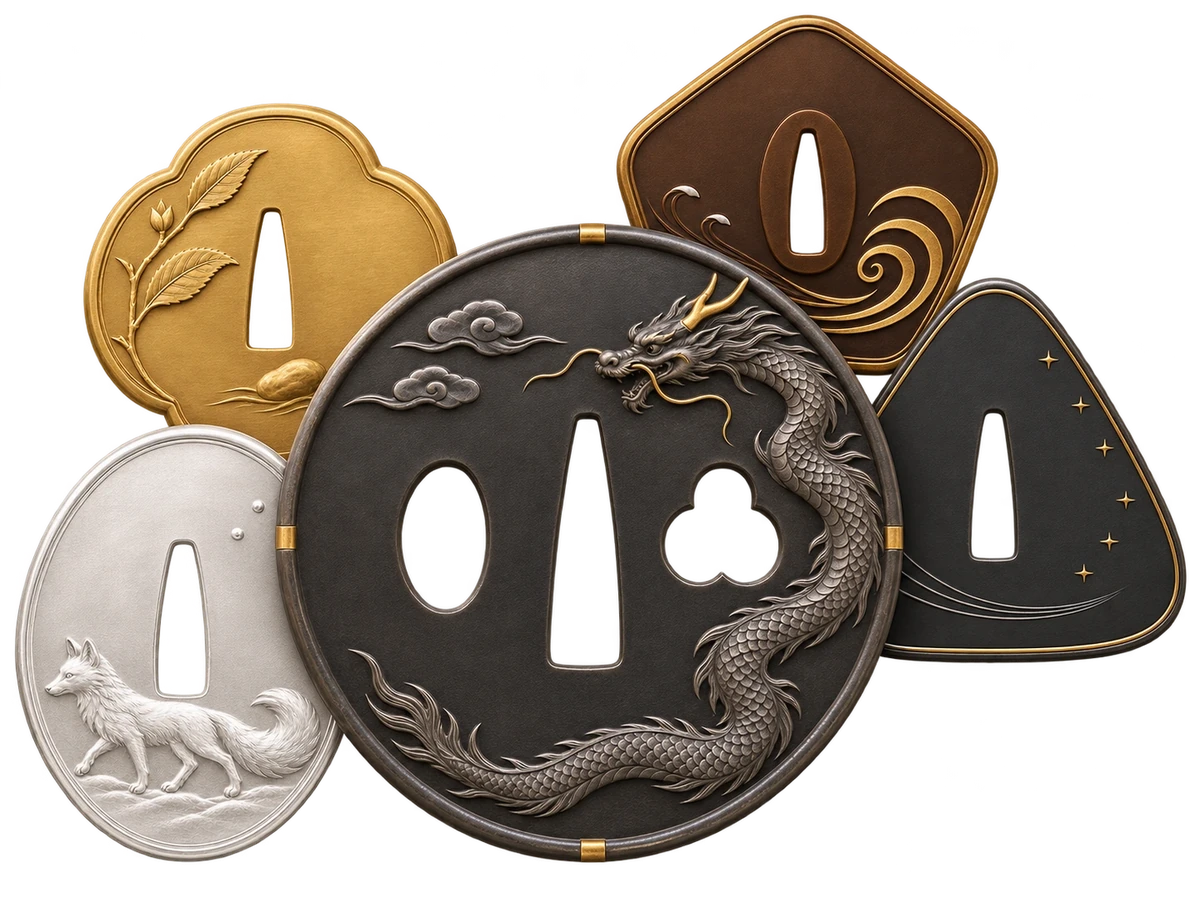
Our current tsuba designs focus on copper-based materials in three directions: natural brass, natural white copper, and colored brass. Distinguishing the base material from its visible finish makes comparisons more useful.
Natural brass: a warm yellow-metal palette
Natural brass suits a mounting built around warm metal tones. Plant motifs, engraved lines, and spare compositions can gain depth through texture and changing light, without requiring dark color in every recess.
A natural finish is not one fixed color swatch. Lighting, surface treatment, and camera angle all influence the photograph, so compare more than one view.
Natural white copper: a clean silver-white palette
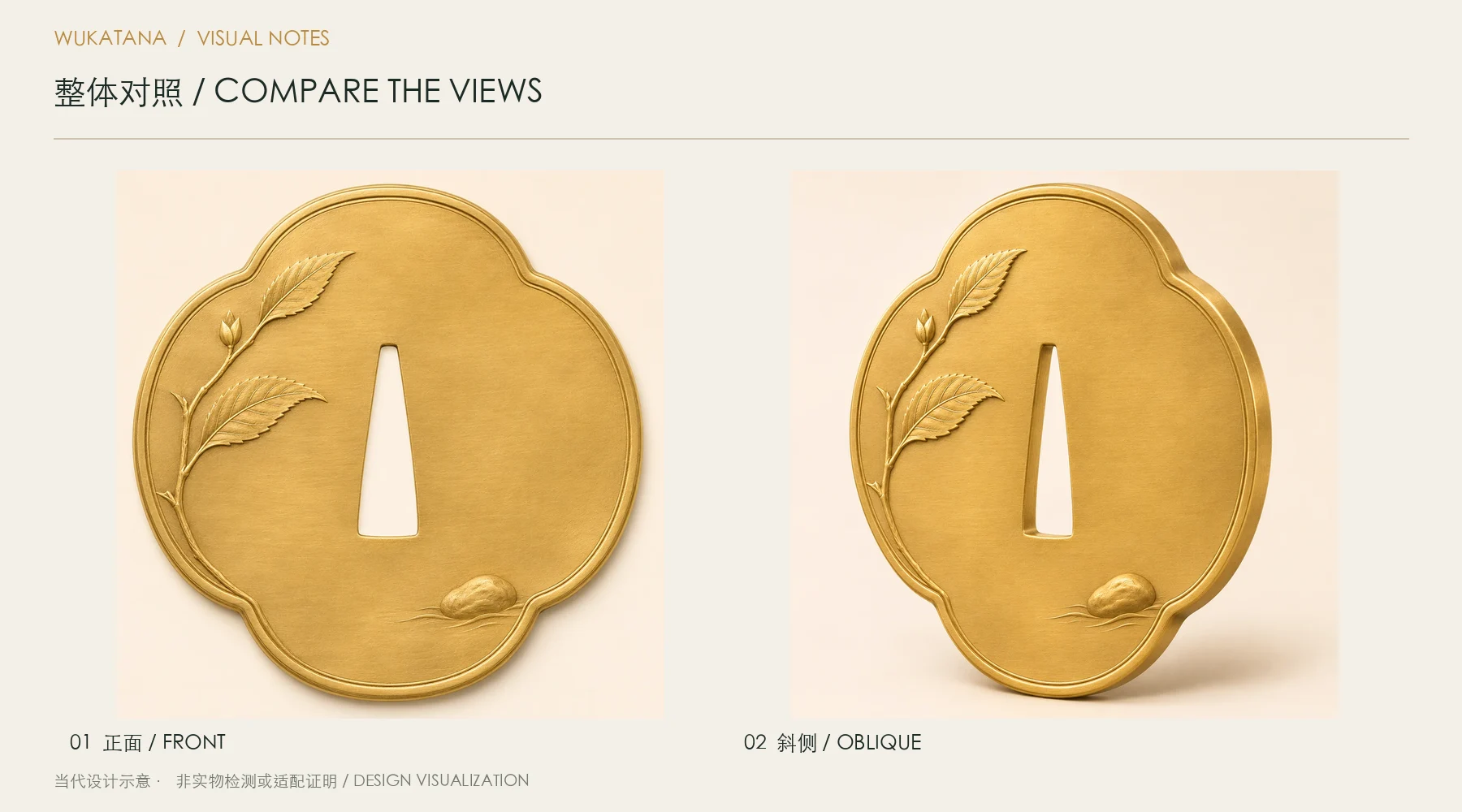
White copper describes the material direction here; it is not silver. Our designs favor a clean, bright silver-white appearance, using natural reflections and light gray shading rather than extensive black recesses or an antiqued-silver effect.
Consider how that brightness relates to the grip, scabbard, and other fittings. A silver-white surface does not require elaborate decoration: a few clear lines can provide enough focus.
Colored brass: organize depth through surface color
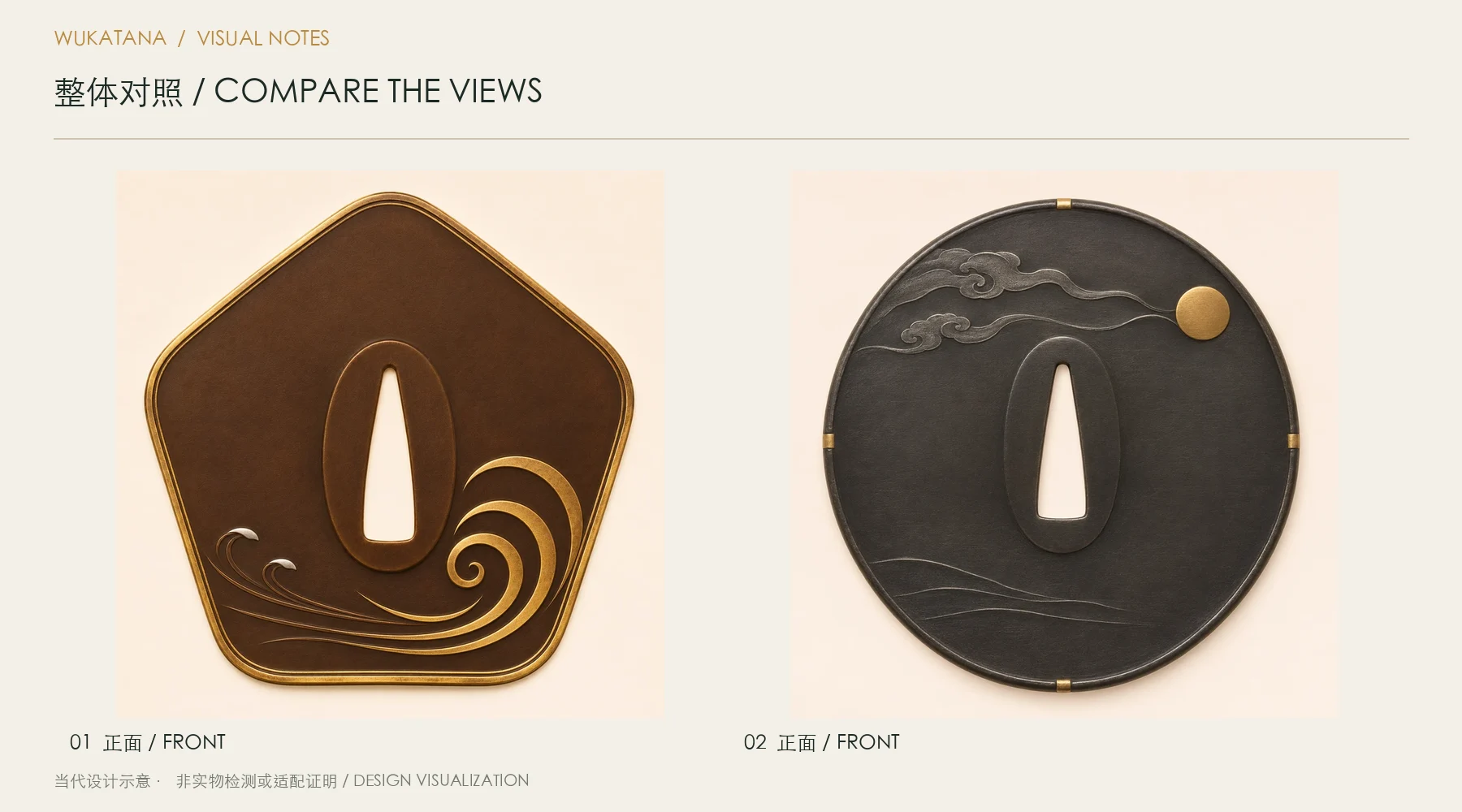
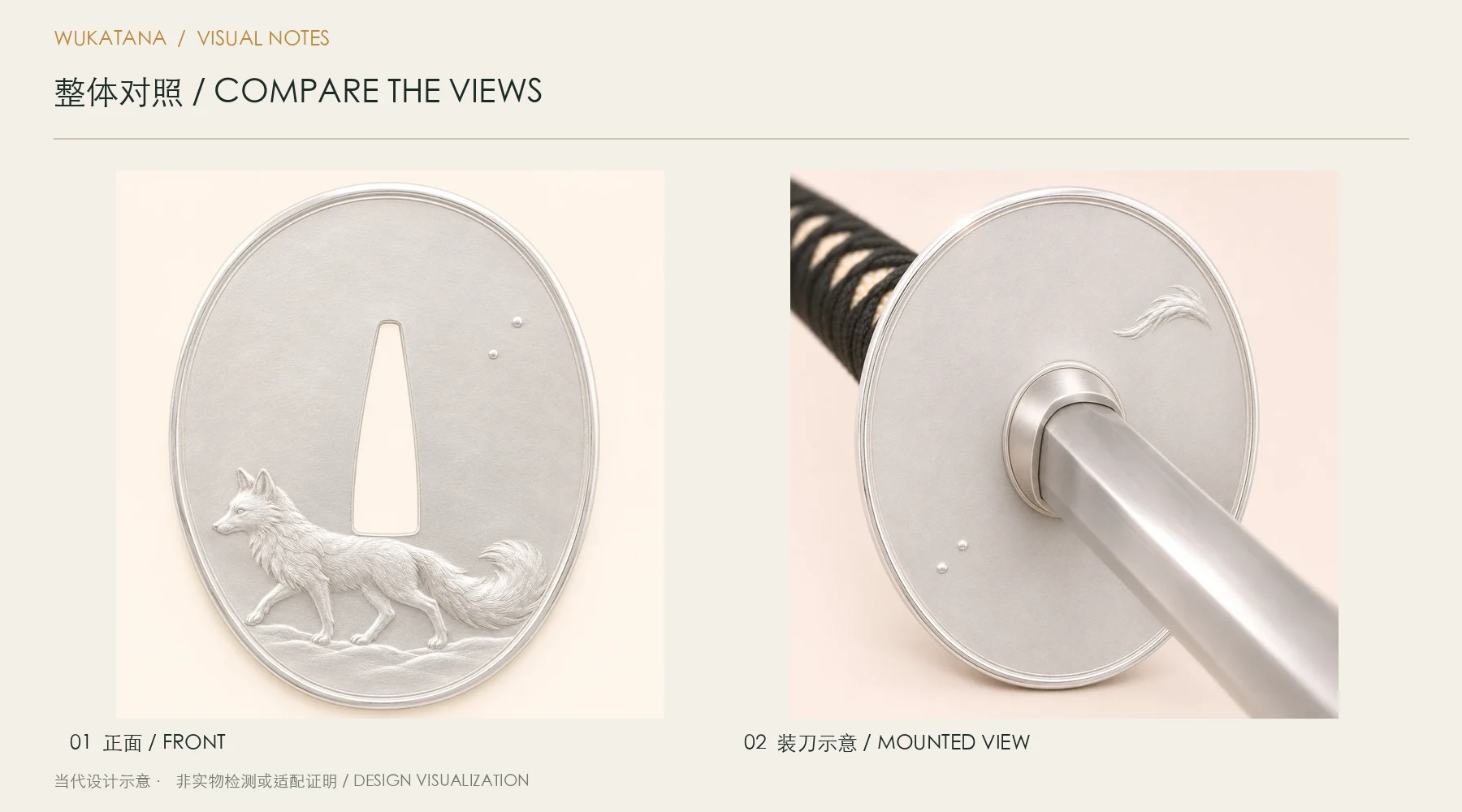
Charcoal and deep brown belong to the colored-brass direction, with brass as the base material. A charcoal surface can carry a few warm accents; brown can support restrained relief and line work. Either can give a collection a consistent palette.
Gold-toned or silver-white areas describe visible color. They do not establish the use of gold, silver, or a particular inlay technique. Confirm the actual process, available colors, and delivery specification for the selected design.