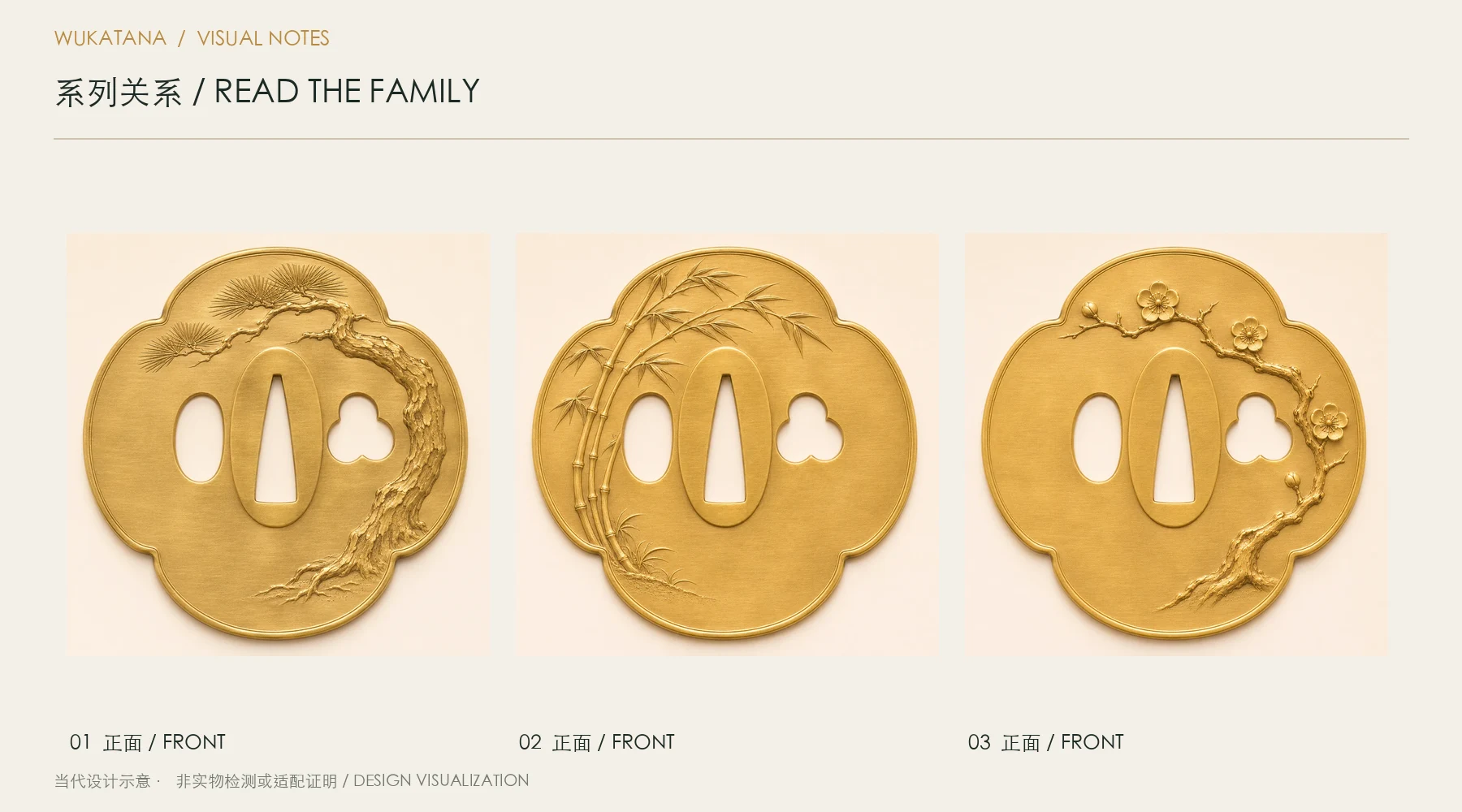
From One Tsuba to a Collection
A strong tsuba collection feels related at a glance, while each member rewards a closer look. We begin with a few shared rules and develop variation within them.
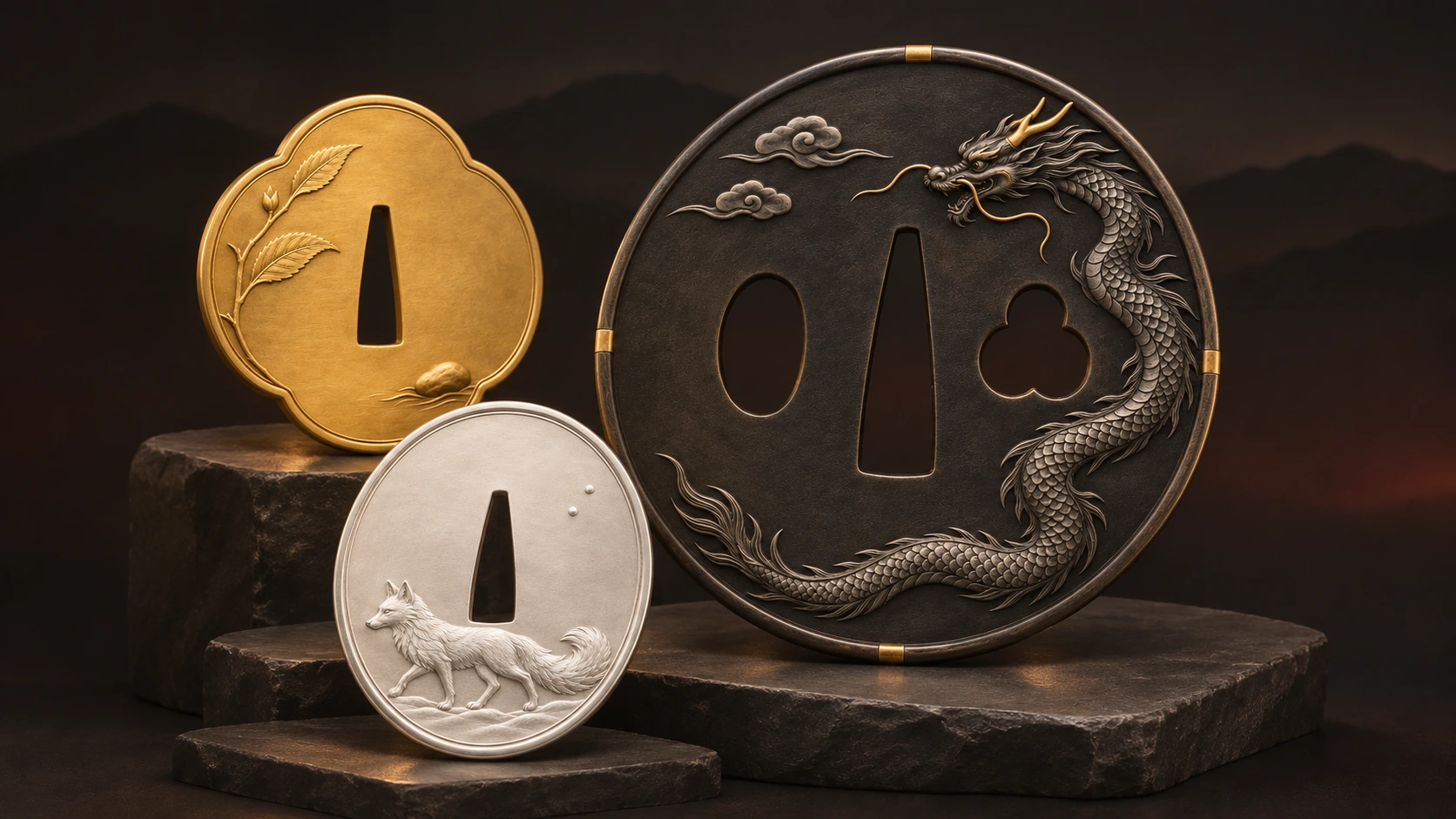
Start with three shared decisions
Outline, material direction, and decorative expression establish a recognizable family. One collection might use round guards, charcoal-colored brass, and restrained warm accents. Another might pair a polygonal outline with brown surfaces and spare engraved lines.
The rules need to be specific. “Eastern-inspired” leaves too much open. A clear approach to rim width, motif placement, and empty space gives later designs a useful foundation.
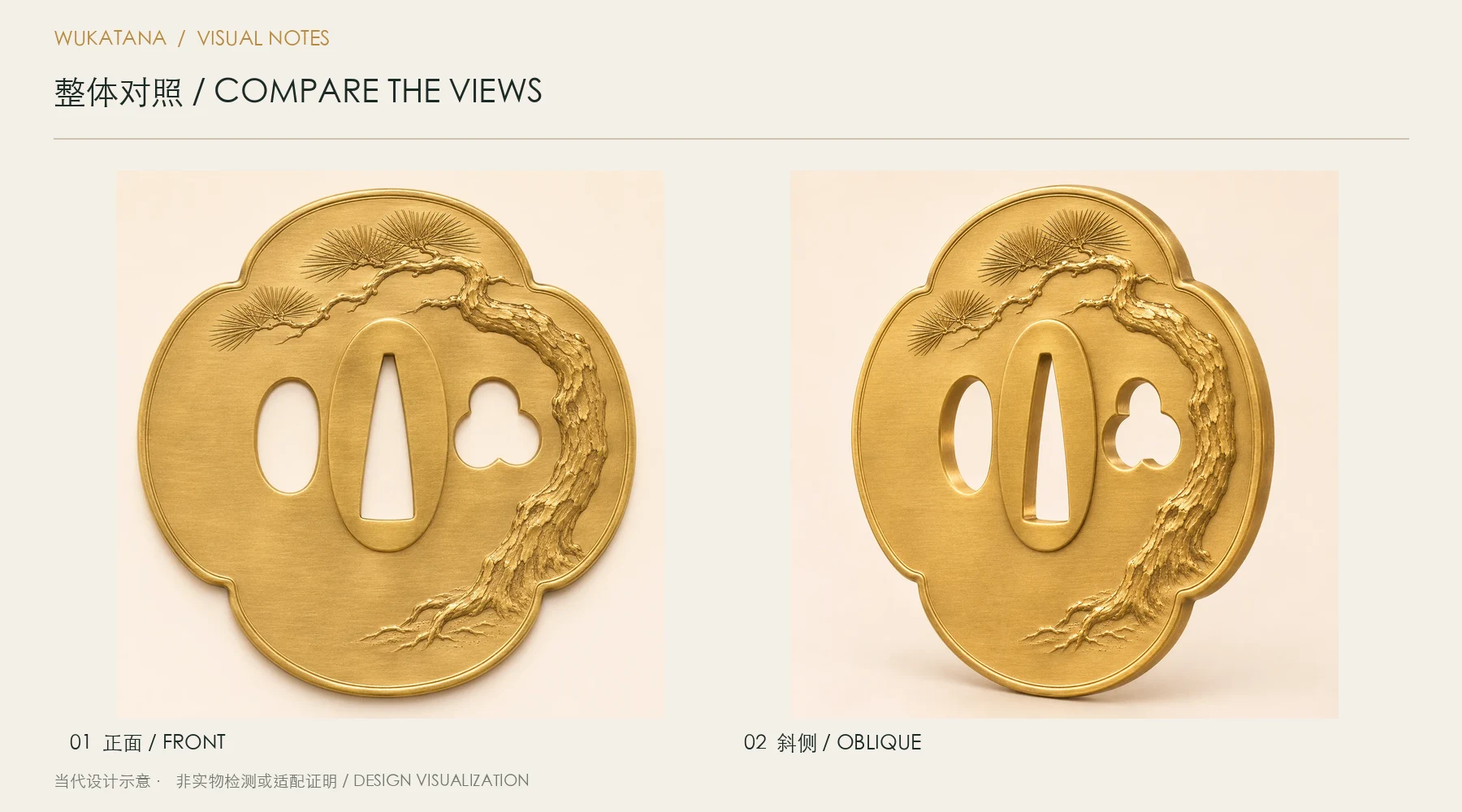
Find variety in the subject and composition
A collection needs more than the same motif with different names. Figures can vary in posture and attributes; landscapes can change through the direction of ridges and water; plants can take on character through the rhythm of their branches.
As the subject changes, the central mounting area, outer edge, and openings must remain legible. Ornament should work around these structural areas rather than conceal them.
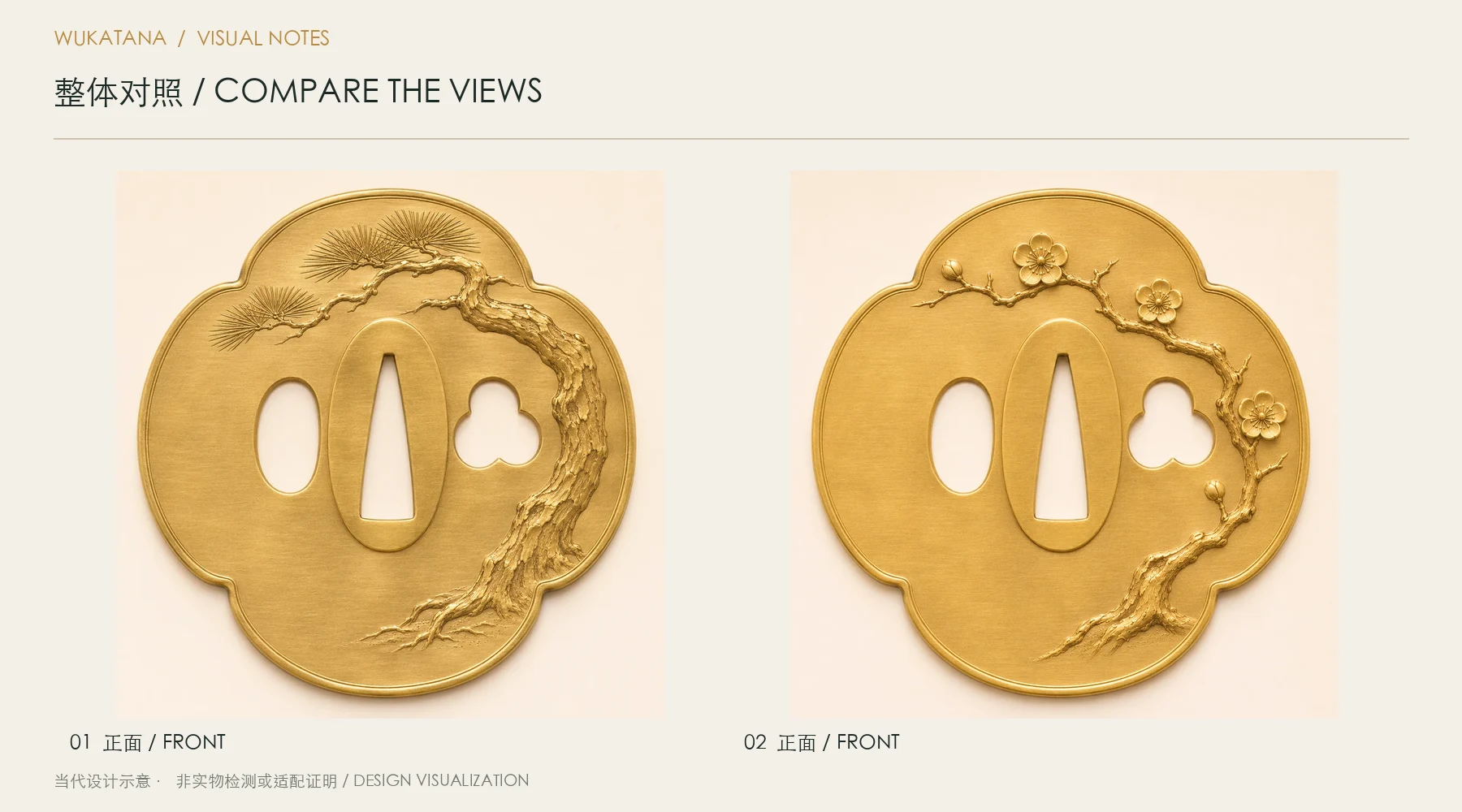
Review the whole family together
An attractive individual image does not guarantee a coherent collection. Place every member on one board at a comparable scale and compare brightness, decorative density, and focal size. A design that stands apart is a reason to revisit the shared rules.
Let the theme determine the number of designs. A paired idea may need only two members; a broader set of subjects can develop over time. There is no requirement for every collection to contain three.