Start with the Mountings: A Way to Look at Swords
The blade often draws the first glance in a sword photograph. Looking toward the grip, guard, and scabbard reveals another way to read the object: how colors repeat, where ornament gathers, and where the design leaves room to breathe.
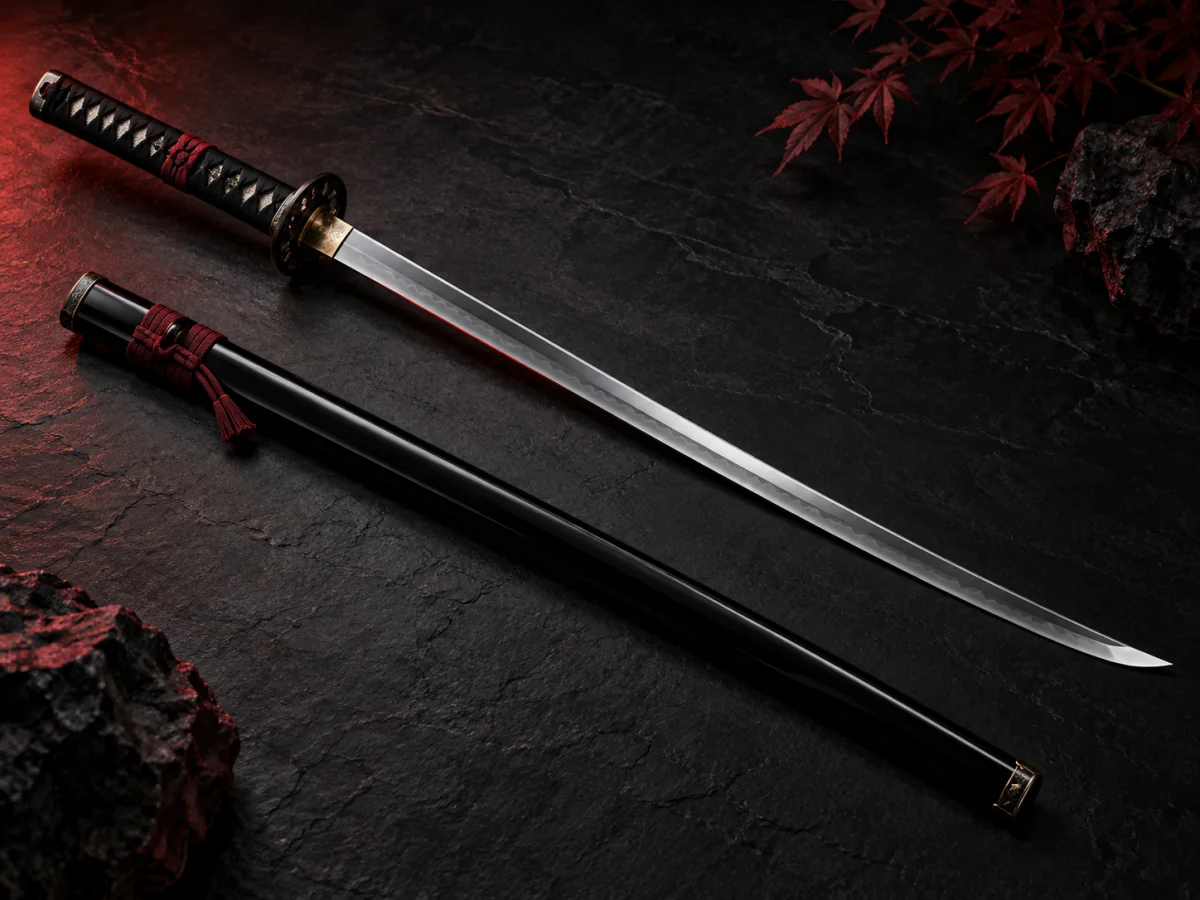
Look at the silhouette before the detail
Begin with a small view of the image. Consider the relationship between grip, guard, and scabbard. Are light and dark areas balanced? Does ornament gather in one place or create a rhythm along the mounting? Individual motifs can wait.
Then look closely at the guard’s edge and decoration. A round, four-lobed, or polygonal outline creates a different visual center. Even the same subject can change character when its surrounding shape changes.
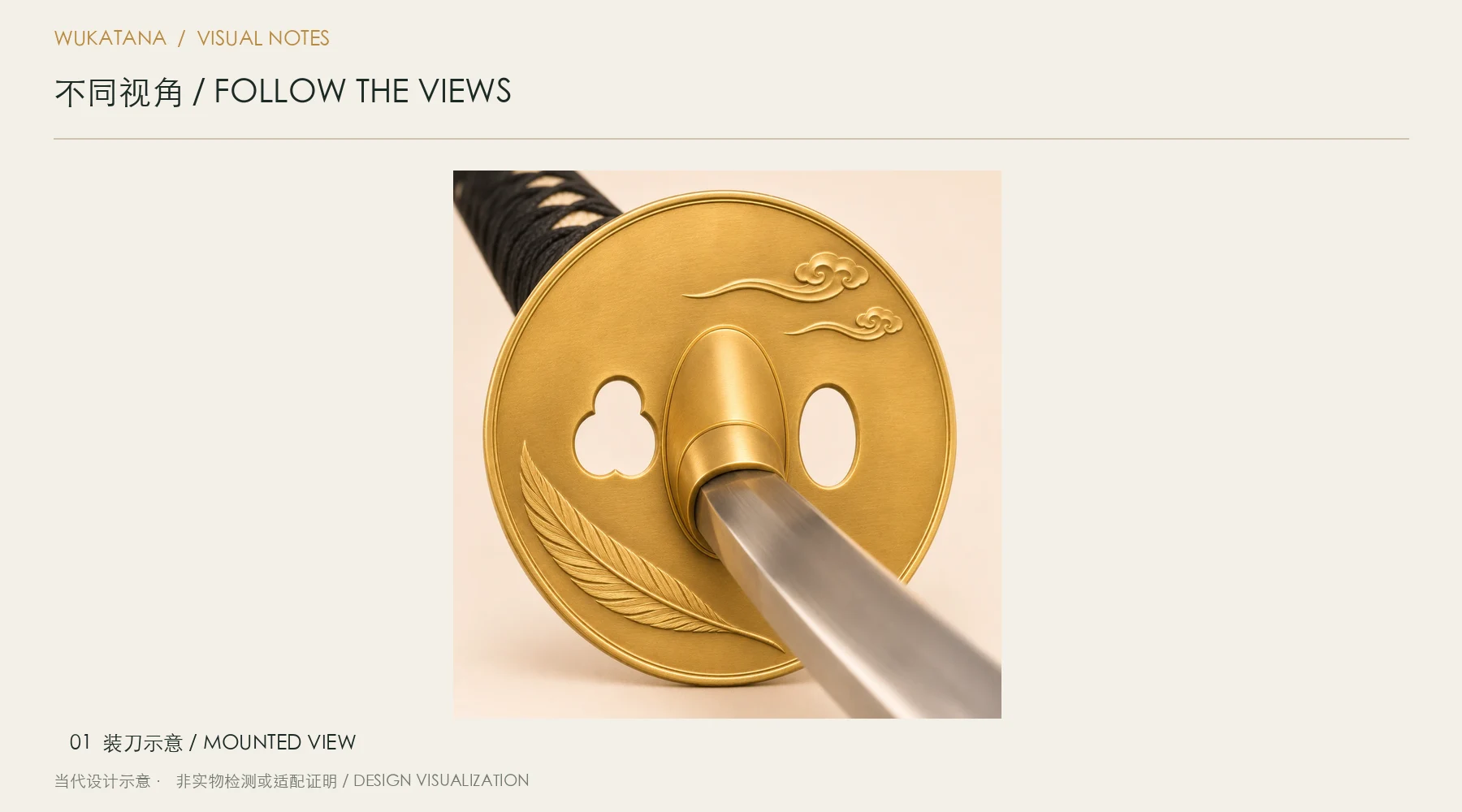
Identify the main palette
A dark wrap and scabbard can make warm copper-colored fittings stand out. With brighter fittings, look at whether the other metal parts share a similar color temperature and surface appearance.
A coordinated mounting does not require identical color everywhere. Notice which colors repeat, where small accents appear, and whether the composition has a clear hierarchy.
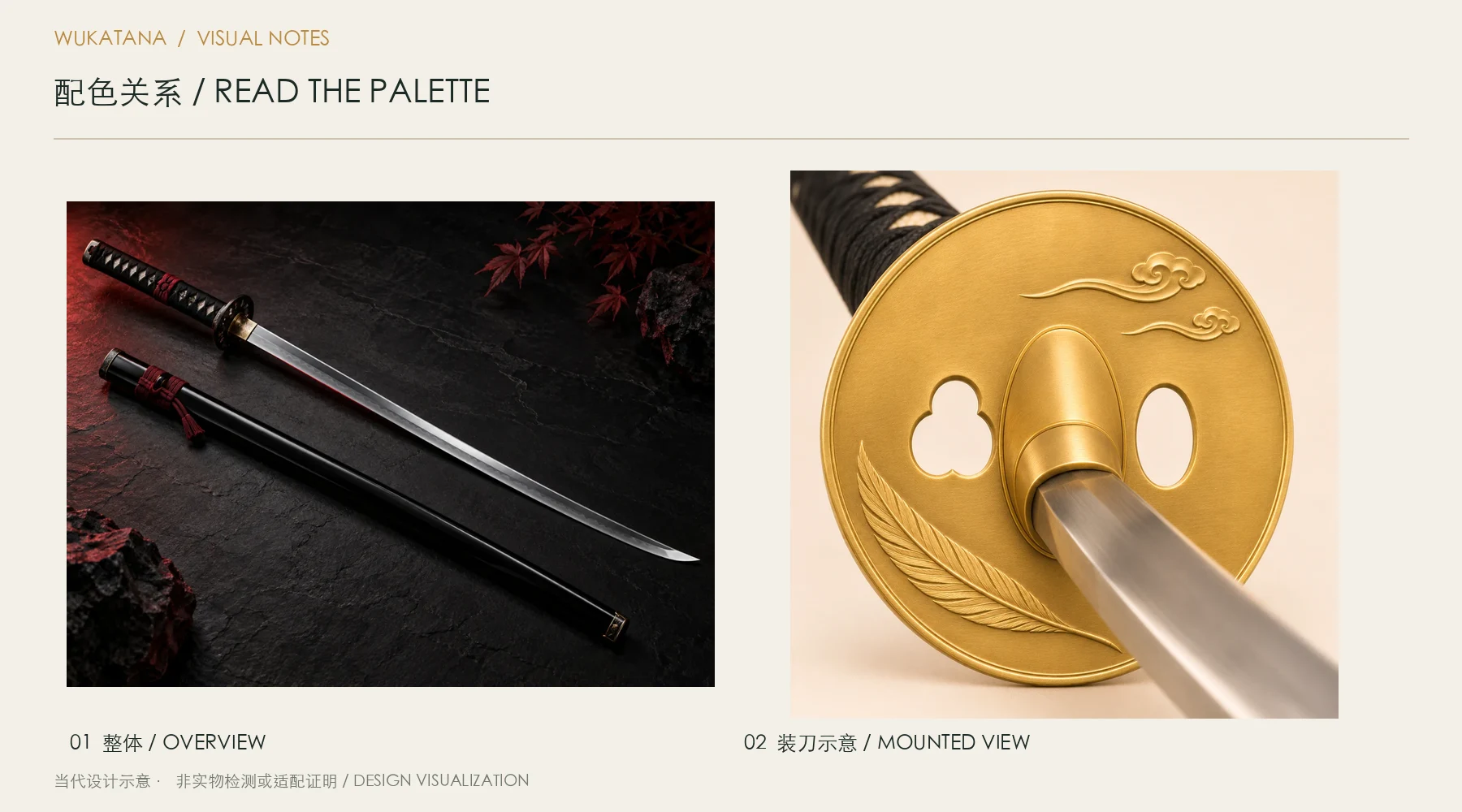
Separate visual observations from historical claims
Contemporary products can reinterpret traditional imagery or combine subjects in new ways. A motif or color scheme alone cannot establish an object’s age, school, or historical origin.
Historical discussion calls for dated museum objects, documents, or catalogs with clear provenance. When discussing a contemporary design, begin with the composition and combinations that are actually visible.