Material, Color, and Shadow in Fine Texture And Smooth Ground
To examine fine texture and smooth ground, begin with specific designs rather than a general style label. This article focuses on surface observation, using Two Scholars Rocks · Standing Peak and Eighteen Arhats · Pagoda Bearer to distinguish visible clues from the information that needs a separate check.
Define the question for this comparison
Separate base material, visible color, and photographic shading when discussing a surface. The current design program uses natural brass, natural white copper, and colored brass. A color name describes the appearance being considered; it does not independently establish an inlay, coating process, or alloy formula.
Fine texture changes the grain of the ground; a smooth field gives more emphasis to contours and a few selected lines. Either treatment needs to work at a scale compatible with the main motif.
First example: Two Scholars Rocks · Standing Peak
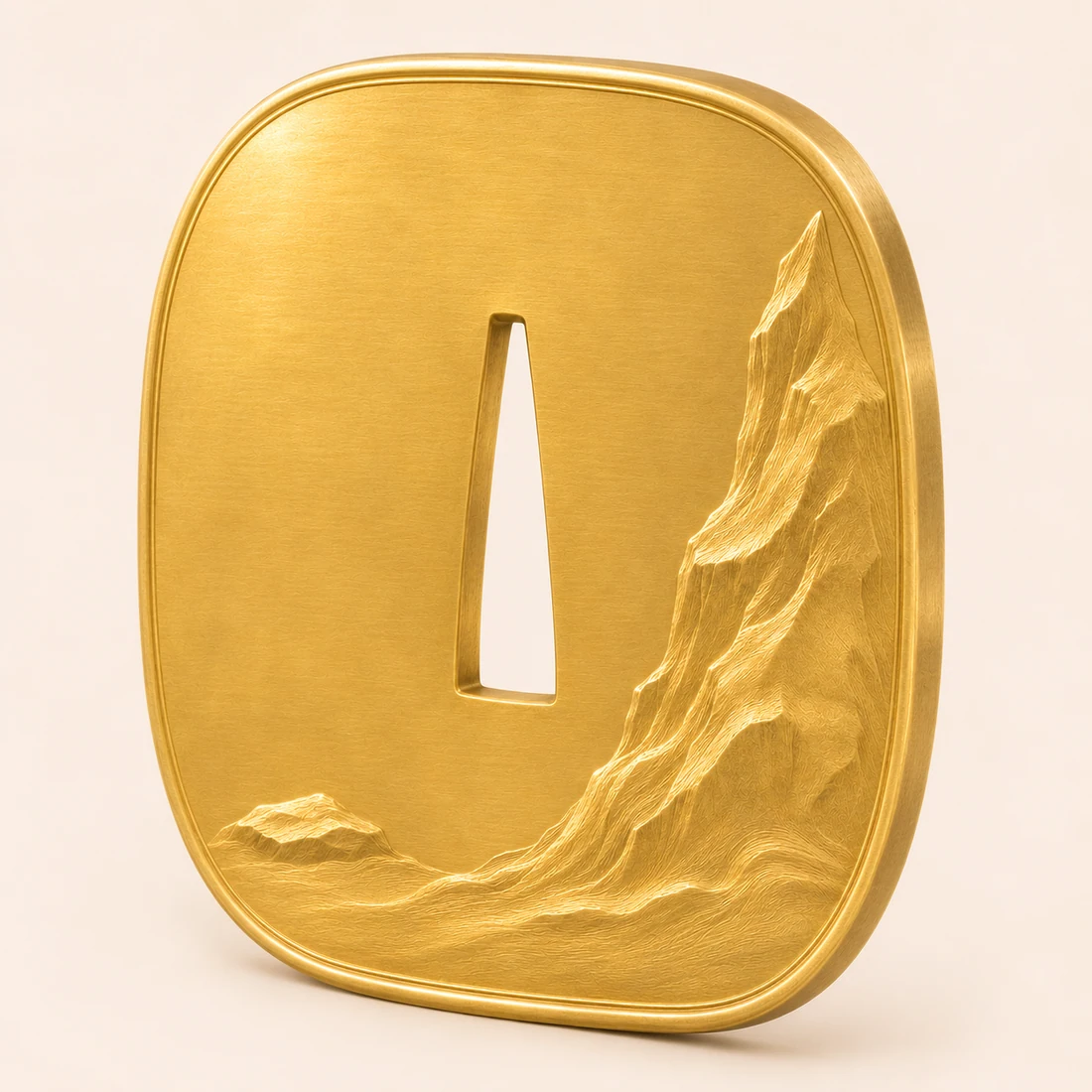
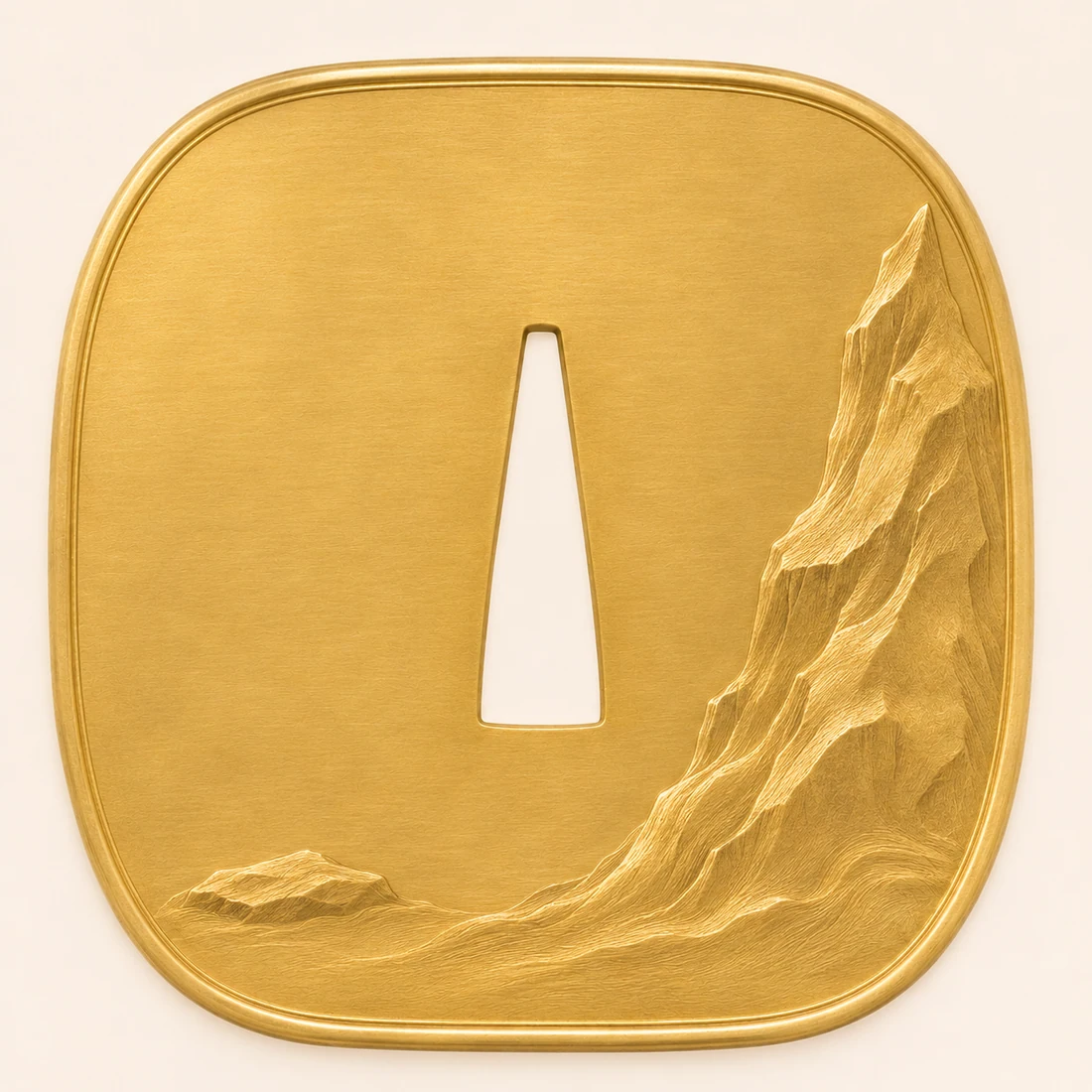
Two Scholars Rocks · Standing Peak is cataloged as natural brass, with rounded square or polygonal form and fine engraved lines, sculpted relief as its decorative approach.
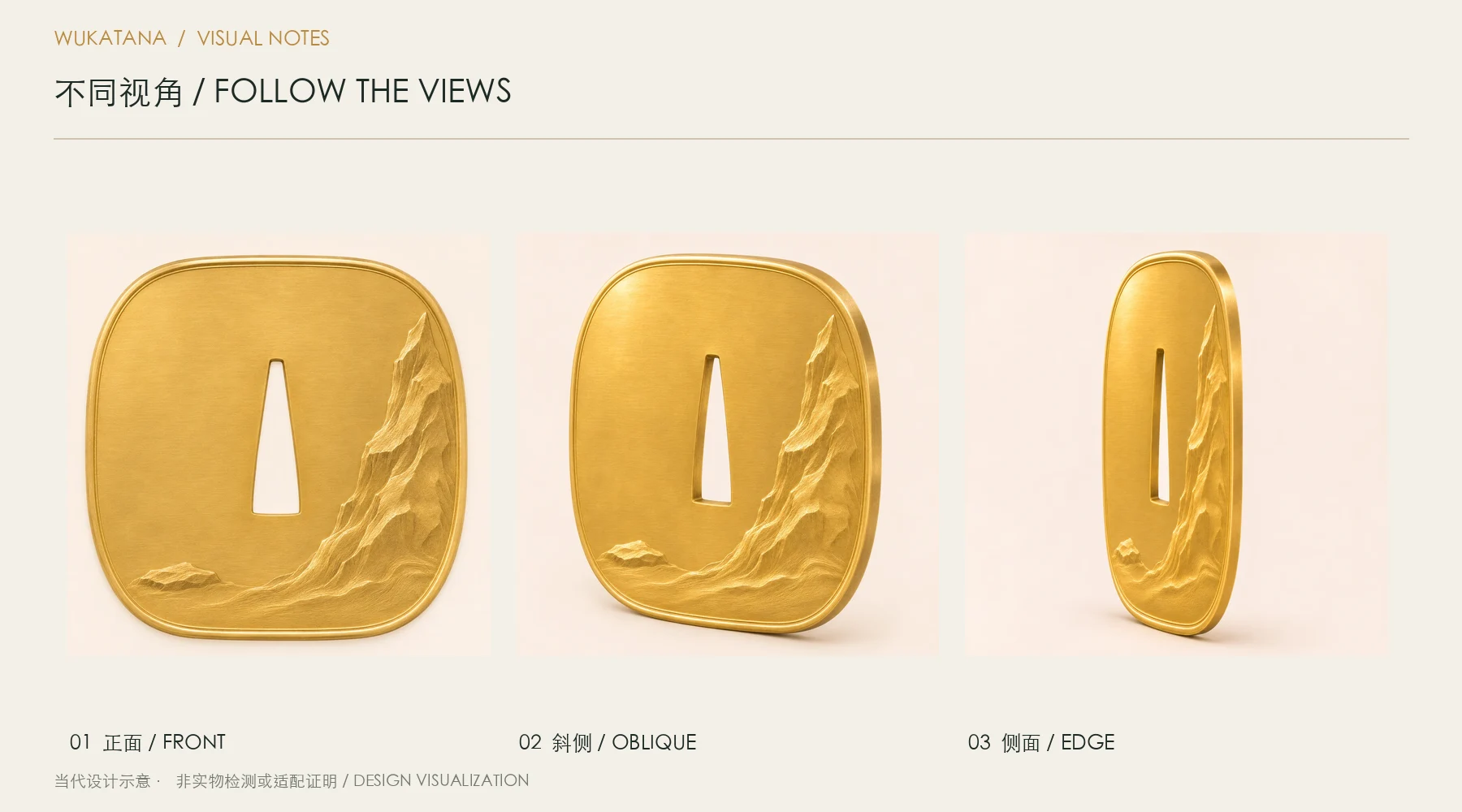
Rocks lie or rise; open space gives each a different setting. Two Scholars Rocks · Standing Peak uses natural brass. A slender rock rises along the right rim, with channels and angular ridges gathering toward its peak.
Read the ground, raised detail, and rim separately. A brighter area may reflect both its intended surface color and the camera angle. One highlight is insufficient evidence that another metal has been used, so keep the material description tied to the product specification rather than to brightness alone.
Second example: Eighteen Arhats · Pagoda Bearer
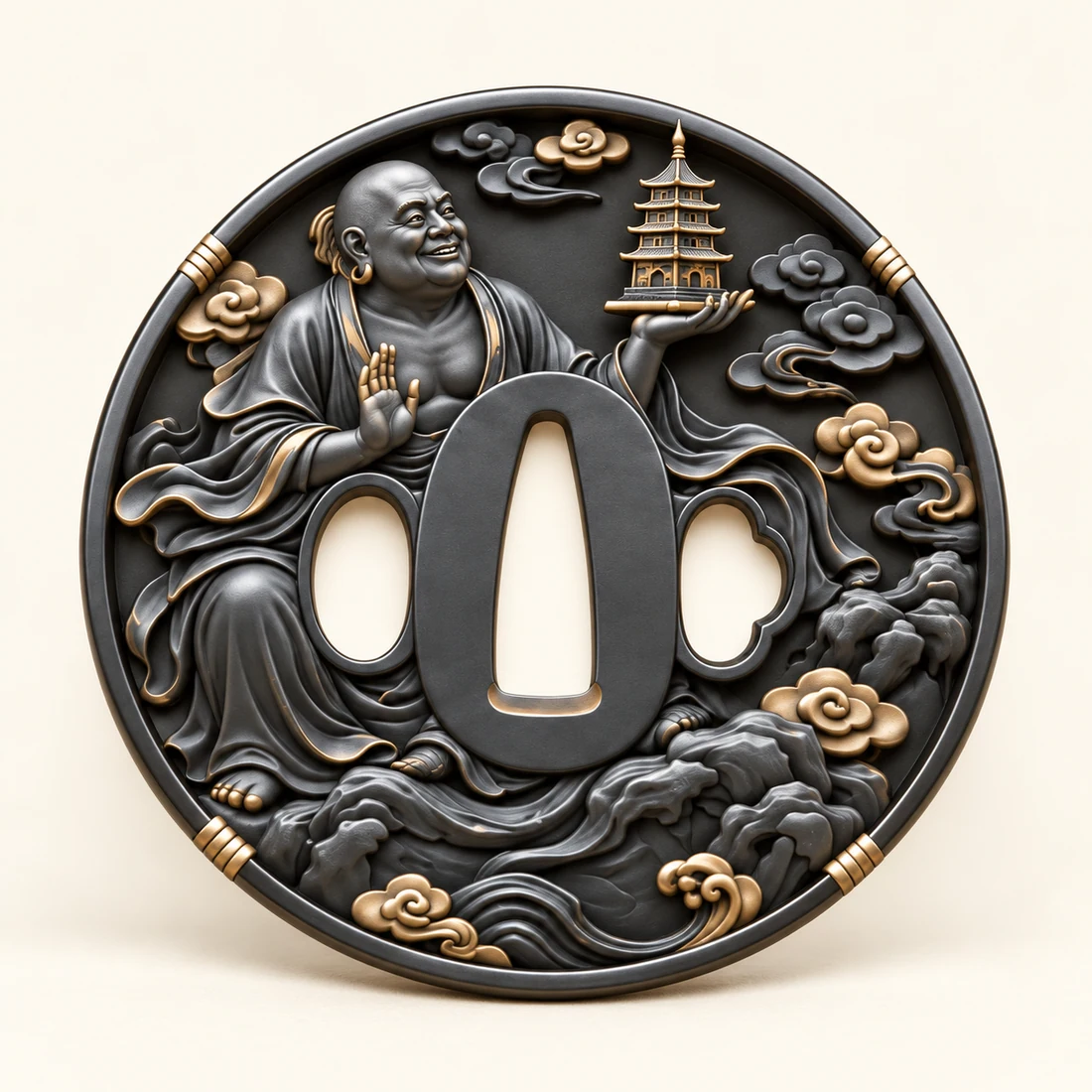
Eighteen Arhats · Pagoda Bearer is cataloged as colored brass, with round or oval form and sculpted relief, restrained color contrast as its decorative approach.
Eighteen Arhats · Pagoda Bearer develops its story through gesture and a distinctive motif. An arhat carries a small tiered pagoda on an open palm, balancing architecture and flowing robes. Within the round outline, graphite-black colored brass sets off the robe folds, with restrained warm-brass-colored accents tracing the ornament.
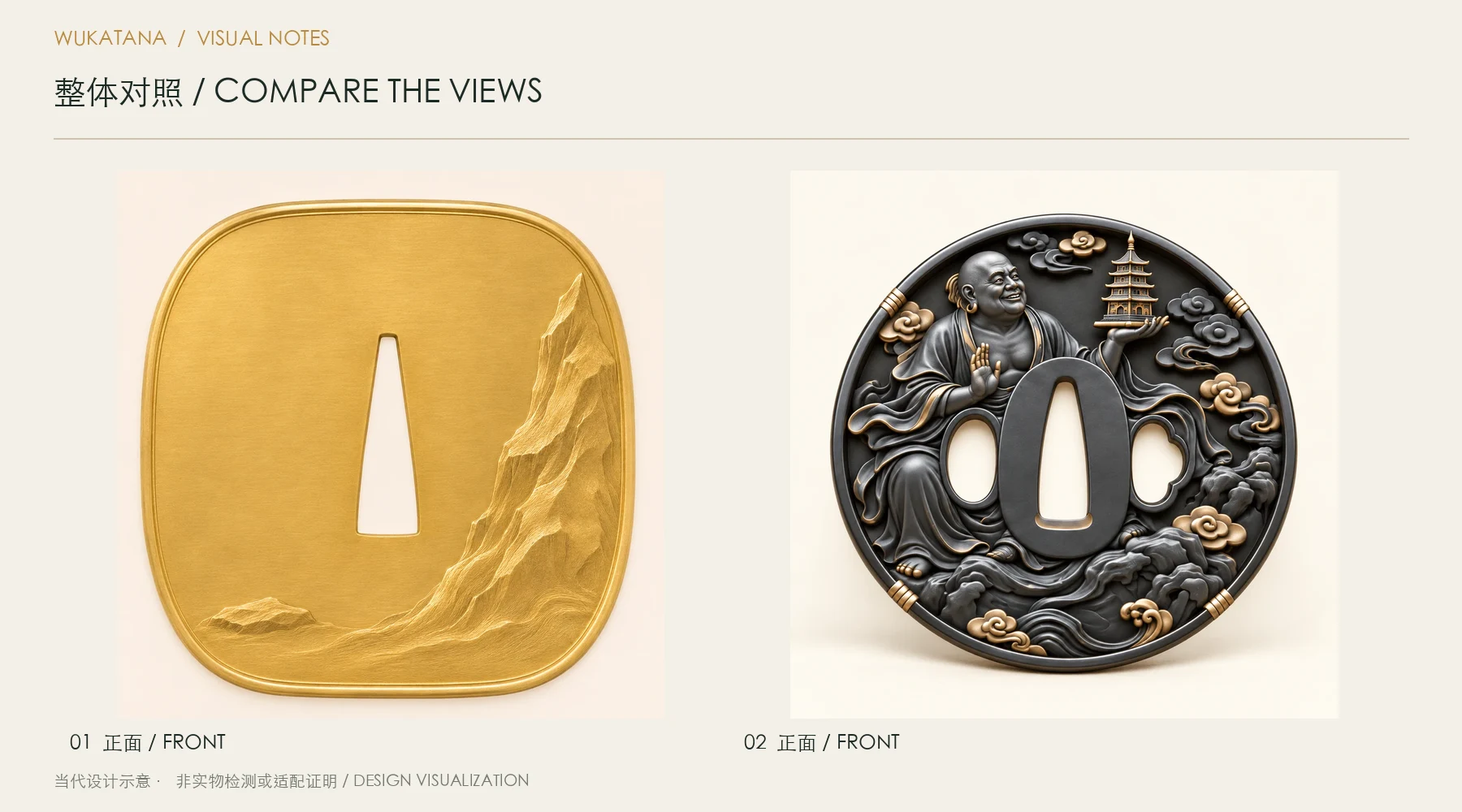
Read Eighteen Arhats · Pagoda Bearer on its own terms before comparing it with the first example. Each design retains its cataloged material and composition. If material, outline, and subject change together, record those variables separately rather than attributing every visual difference to one factor.
Turn looking into a repeatable method
Check whether the ground texture overwhelms the motif and whether the thumbnail breaks into small, unreadable visual noise.
Use the front view to record the dominant color, an oblique view to follow changing highlights, and the edge view to understand the rim. In this catalog, white copper is presented with clean silver-white color and gentle gray depth. Charcoal-colored brass should retain a readable dark form, with accents doing only the emphasis the composition needs.
Keep one clear outcome
For fine texture and smooth ground, make the record specific to the two designs: mark the first detail you notice in Two Scholars Rocks · Standing Peak, then identify a corresponding observation area in Eighteen Arhats · Pagoda Bearer. Describe the shapes and relationships first, followed by the preference or question that needs to be resolved.
Keep three separate notes: the confirmed material name, the color appearance you want to preserve, and any finish details still awaiting confirmation. Leaving unverified processes as questions makes later communication more accurate and prevents an observation about appearance from turning into an unsupported technical claim.