One Design Across Six Views: A Tsuba Design Checklist
To examine one design across six views, begin with specific designs rather than a general style label. This article focuses on composition review, using Four Weather Signs · Passing Rain and Four Weather Signs · Rolling Thunder to distinguish visible clues from the information that needs a separate check.
Define the question for this comparison
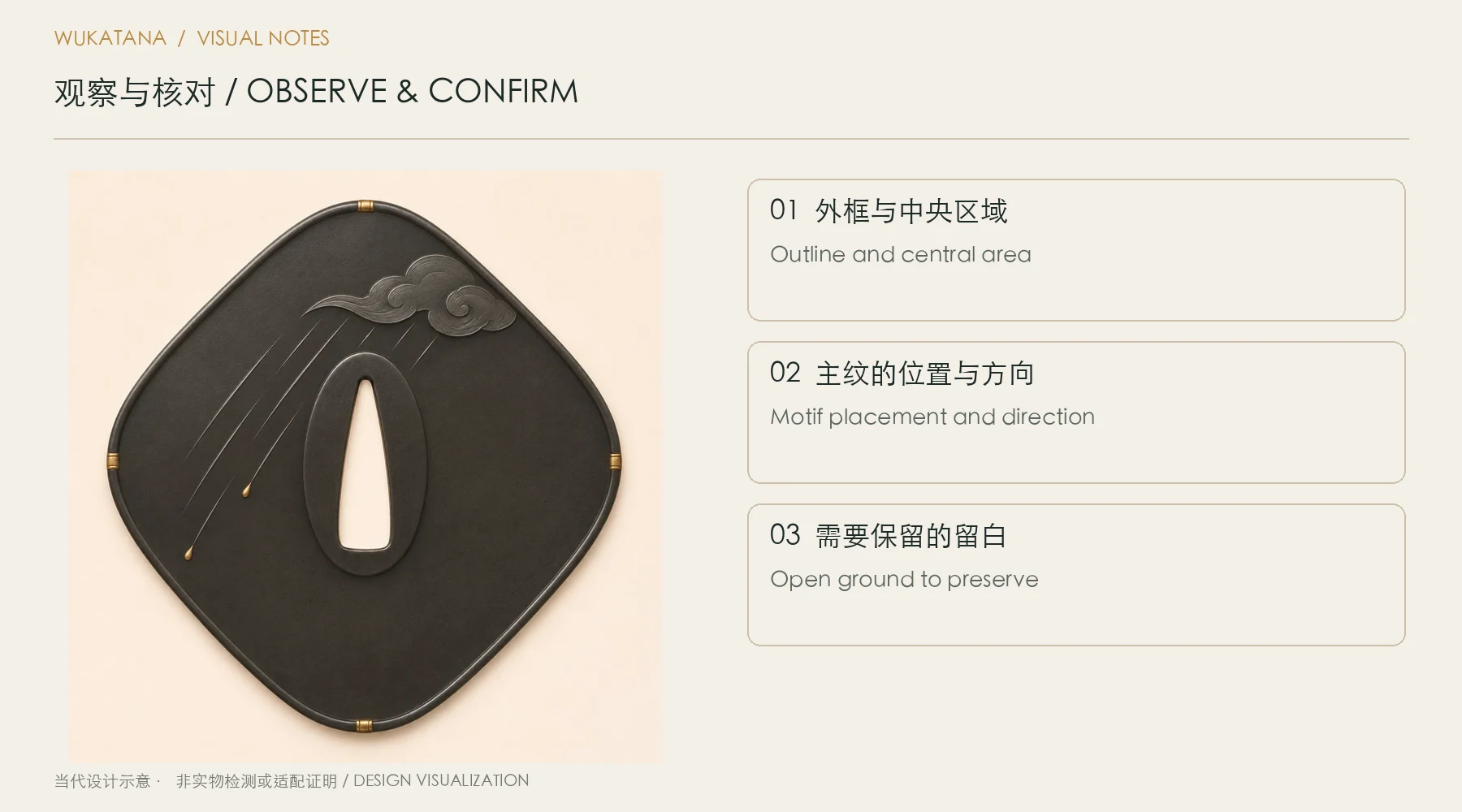
A design review becomes more useful when a subject is broken into visible relationships: where the outline turns, where the motif gathers, and where empty ground provides a pause. Establishing those relationships before adding detail makes the hierarchy easier to preserve through later revisions and changes of viewpoint.
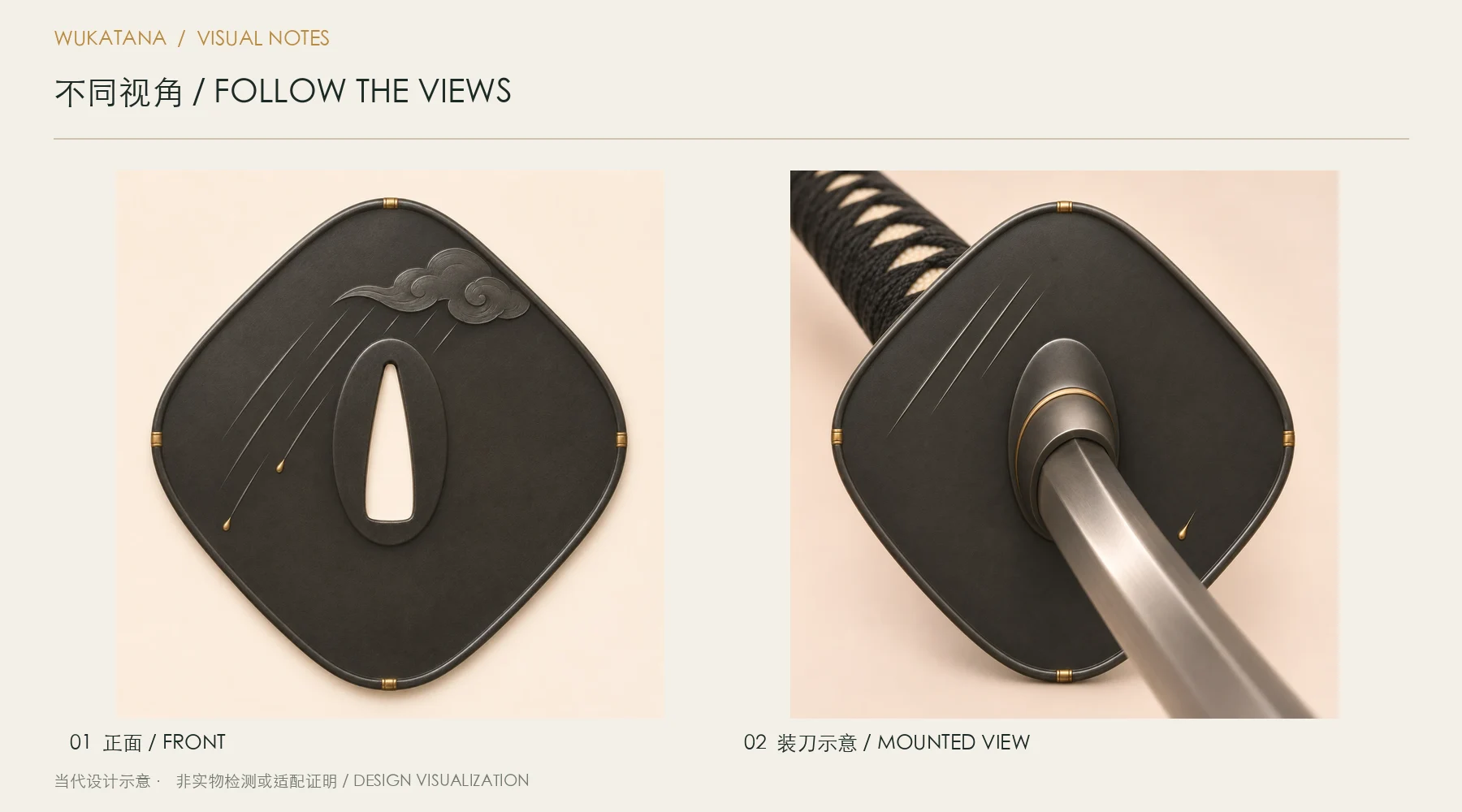
Front, oblique, reverse, edge, and mounted views should explain the same guard. Openings, outline, motif position, and palette need to remain traceable across those views.
First example: Four Weather Signs · Passing Rain
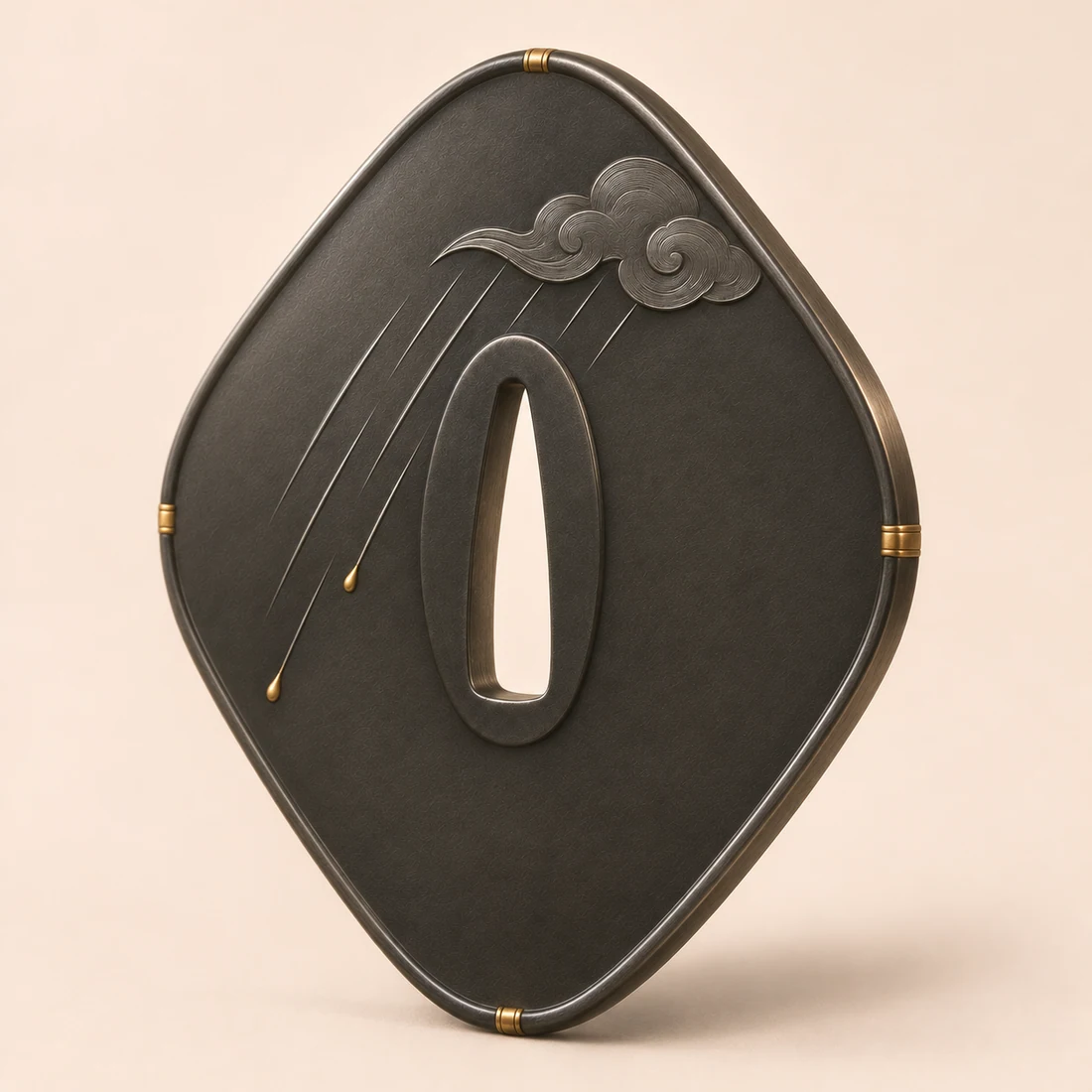
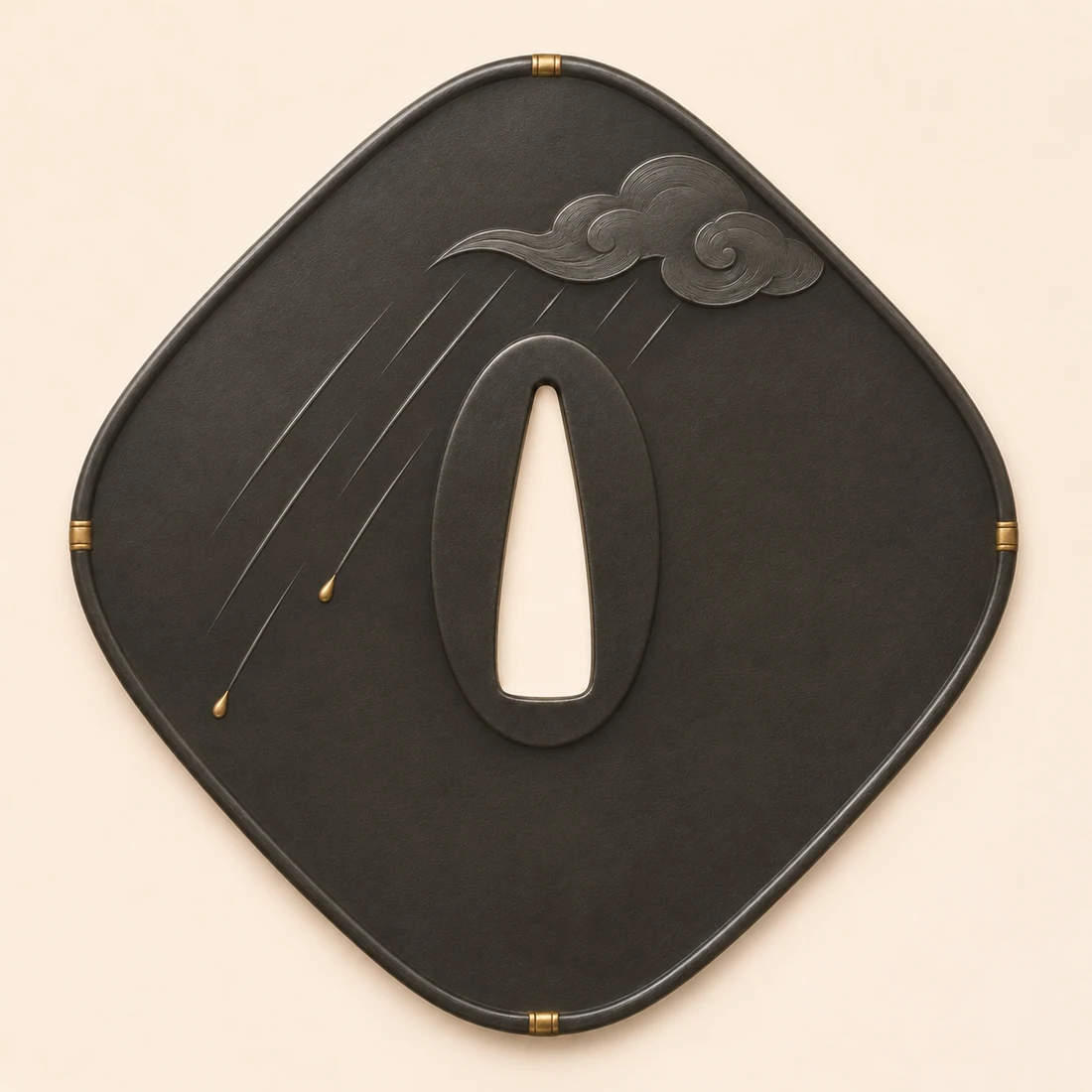
Four Weather Signs · Passing Rain is cataloged as colored brass, with rounded square or polygonal form and fine engraved lines, sculpted relief, restrained color contrast as its decorative approach.
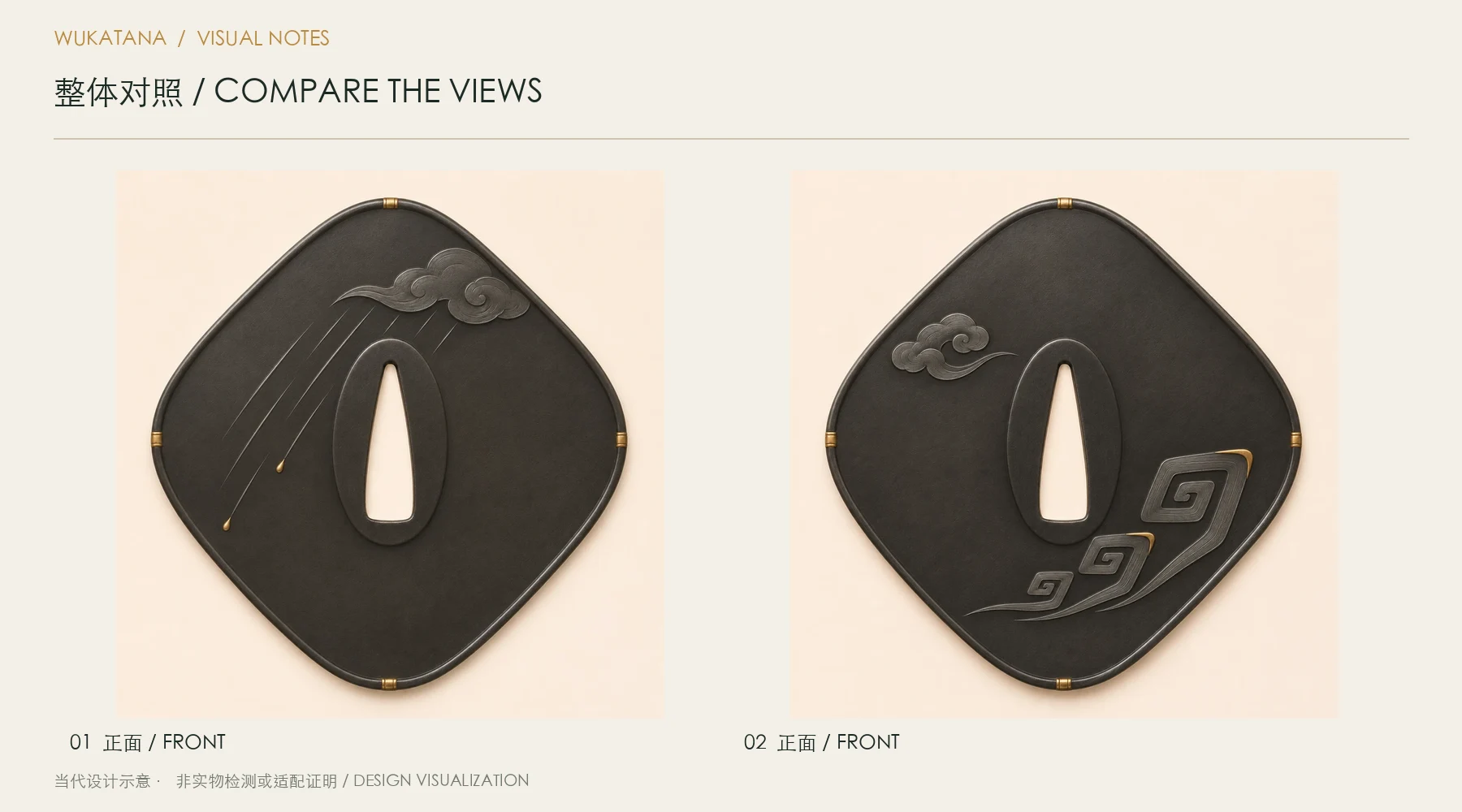
Clouds rise and rain falls; the pattern holds their echo. Four Weather Signs · Passing Rain uses colored brass. Low cloud gathers at the upper right as five slanted rain lines fall toward the lower left.
As a composition example, reduce this design to three levels: outer frame, central area, and principal motif. Any added detail should have a readable job, whether it strengthens a direction, explains a form, or contributes a clue to the subject. Detail without a job makes revision harder.
Second example: Four Weather Signs · Rolling Thunder
Four Weather Signs · Rolling Thunder is cataloged as colored brass, with rounded square or polygonal form and fine engraved lines, sculpted relief, restrained color contrast as its decorative approach.
Clouds rise and rain falls; the pattern holds their echo. Four Weather Signs · Rolling Thunder uses colored brass. Three angular thunder curls gather at the lower right, answered by a small cloud and two warm-brass turns.
Read Four Weather Signs · Rolling Thunder on its own terms before comparing it with the first example. Each design retains its cataloged material and composition. If material, outline, and subject change together, record those variables separately rather than attributing every visual difference to one factor.

Turn looking into a repeatable method
Track one turn of the rim and one motif detail through every view before judging the photographs solely on atmosphere.
Begin with a low-detail silhouette and place the principal motif around the central mounting area. Check for congestion near the rim, then test the focus in a thumbnail. Include a mounted view at this stage: a composition that succeeds in isolation may need adjustment once the grip and adjacent fittings cover part of it.
Keep one clear outcome
For one design across six views, make the record specific to the two designs: mark the first detail you notice in Four Weather Signs · Passing Rain, then identify a corresponding observation area in Four Weather Signs · Rolling Thunder. Describe the shapes and relationships first, followed by the preference or question that needs to be resolved.
Write revisions as actions: reduce a line group, move a secondary motif, or retain a continuous interval of open ground. Change one class of relationship at a time and compare the same view again. This makes it possible to judge whether the revision solved the identified problem instead of merely creating a different picture.