Charcoal-Colored Brass: A Tsuba Design Checklist
To examine charcoal-colored brass, begin with specific designs rather than a general style label. This article focuses on composition review, using Three Stellar Orbits · Crossing Paths and Three Stellar Orbits · Near Ring to distinguish visible clues from the information that needs a separate check.
Define the question for this comparison
A design review becomes more useful when a subject is broken into visible relationships: where the outline turns, where the motif gathers, and where empty ground provides a pause. Establishing those relationships before adding detail makes the hierarchy easier to preserve through later revisions and changes of viewpoint.
Charcoal-colored brass can use a small number of warm accents to establish focus. The form should remain readable through contour and surface relief, and the dark appearance should not be relabeled as iron or corrosion.
First example: Three Stellar Orbits · Crossing Paths
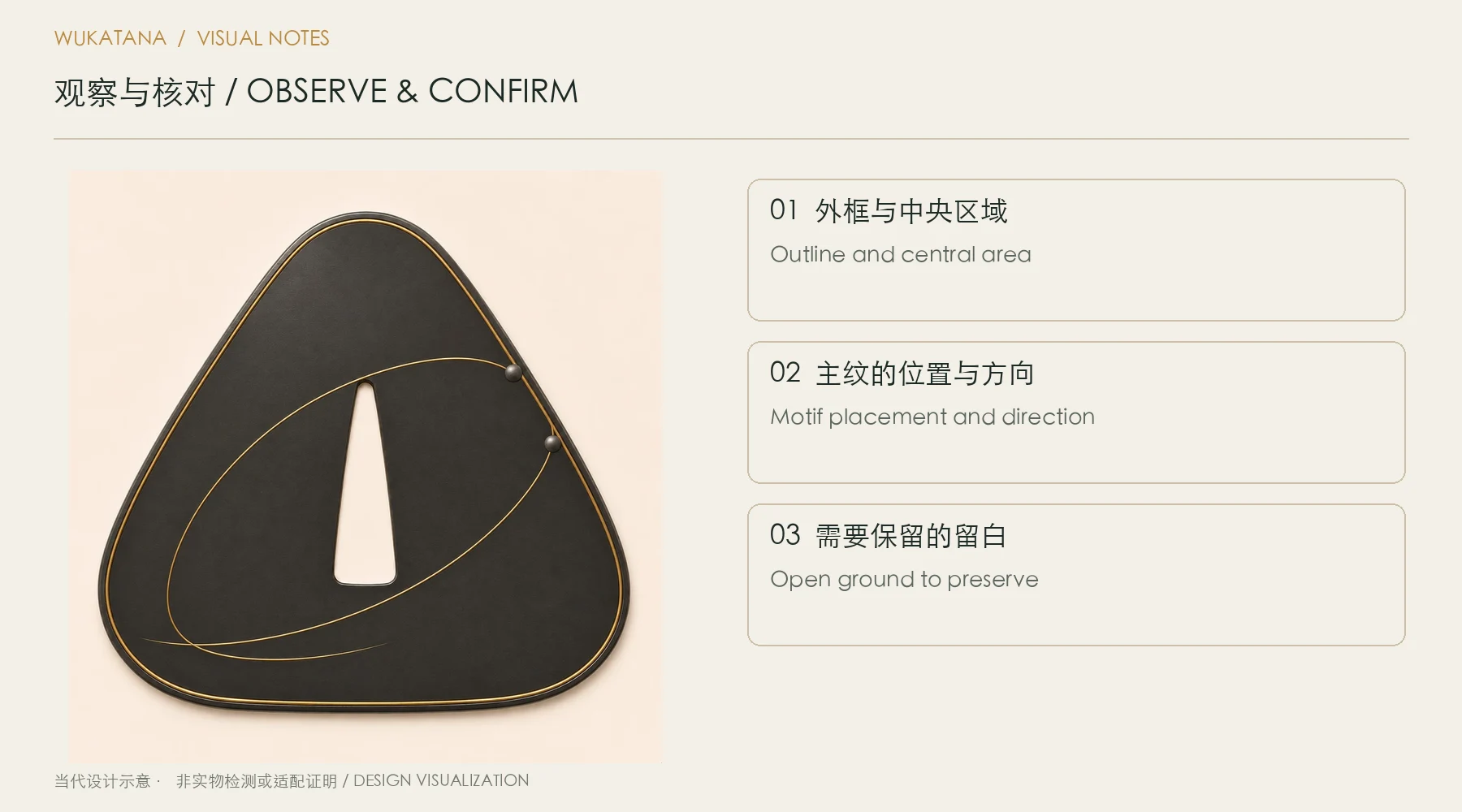
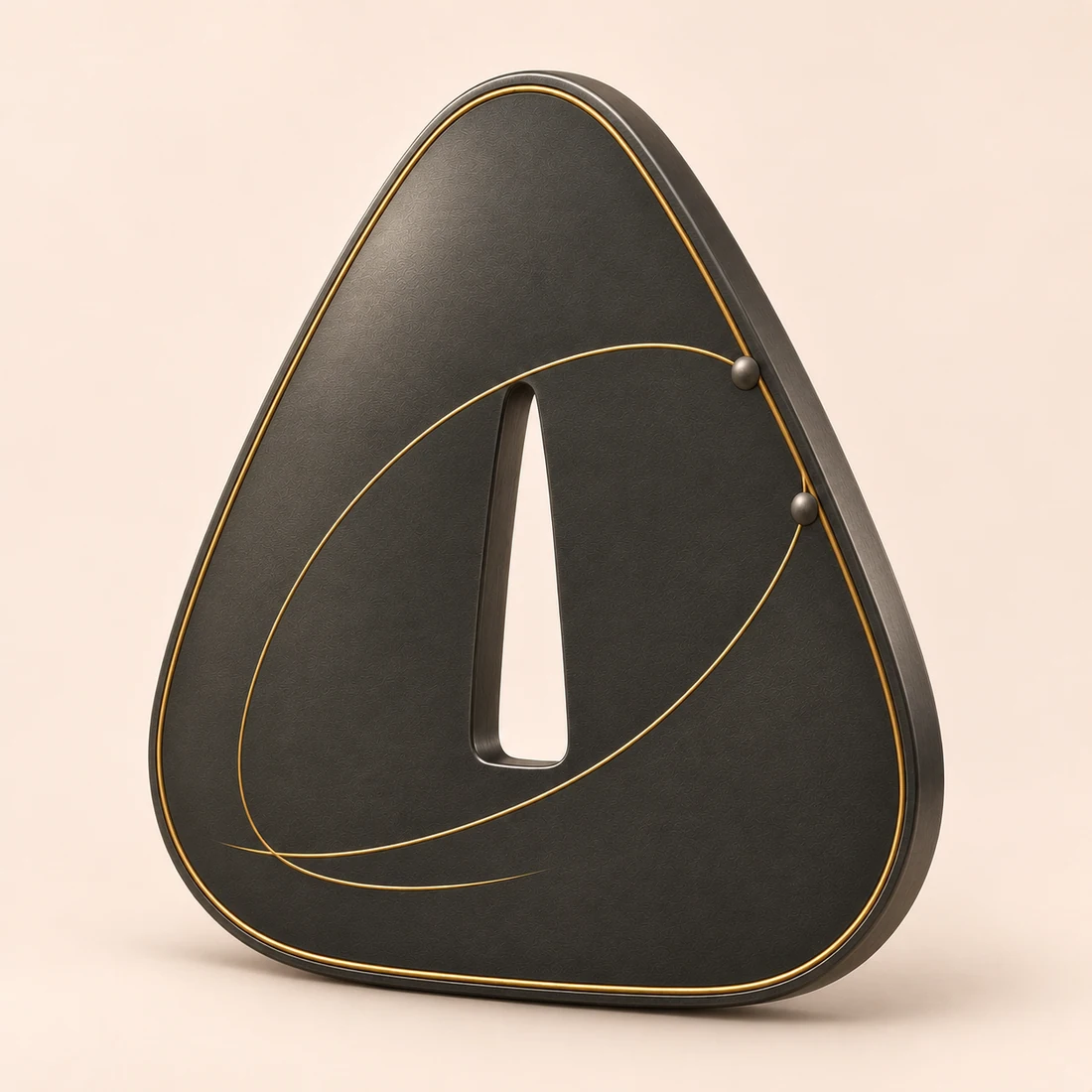
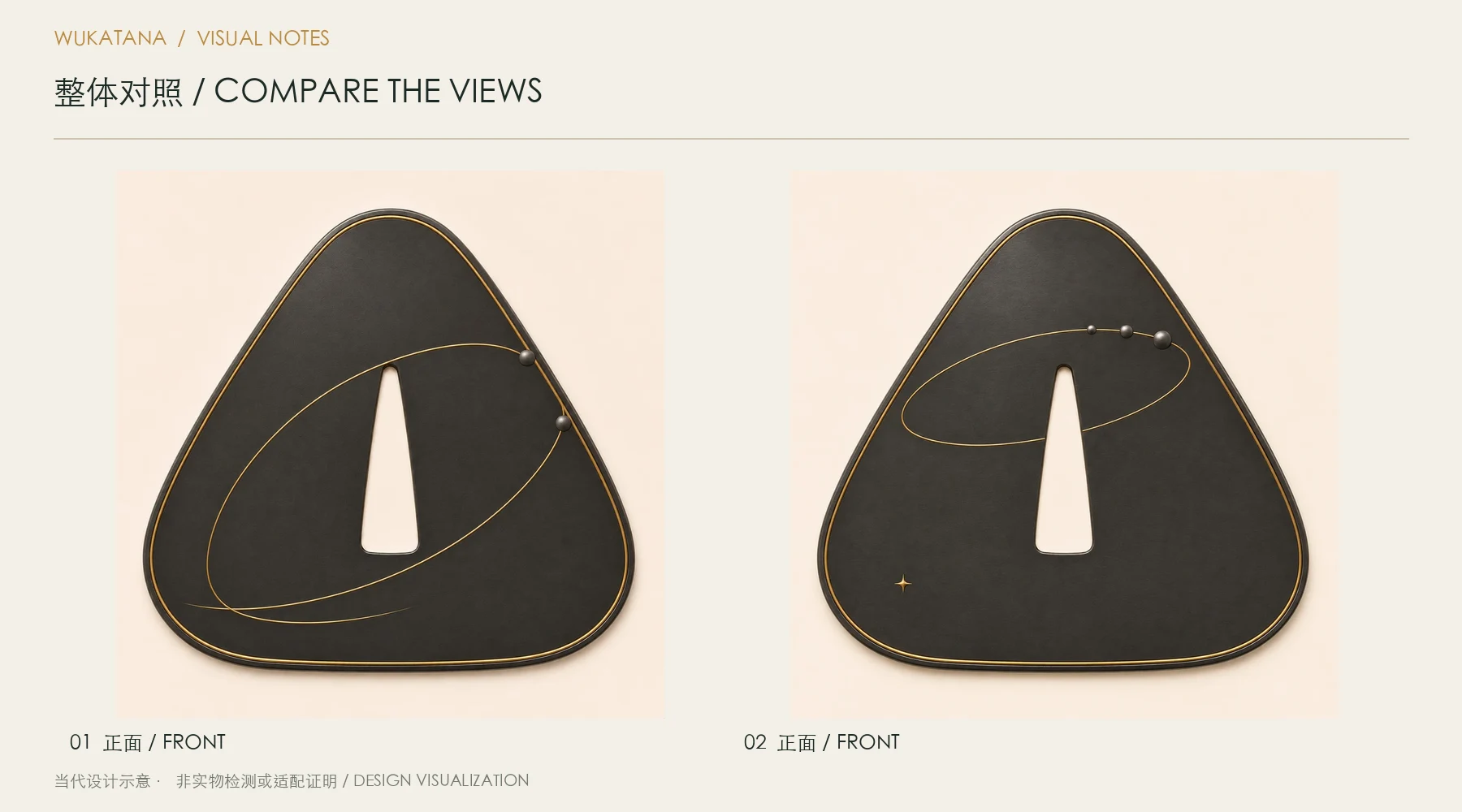
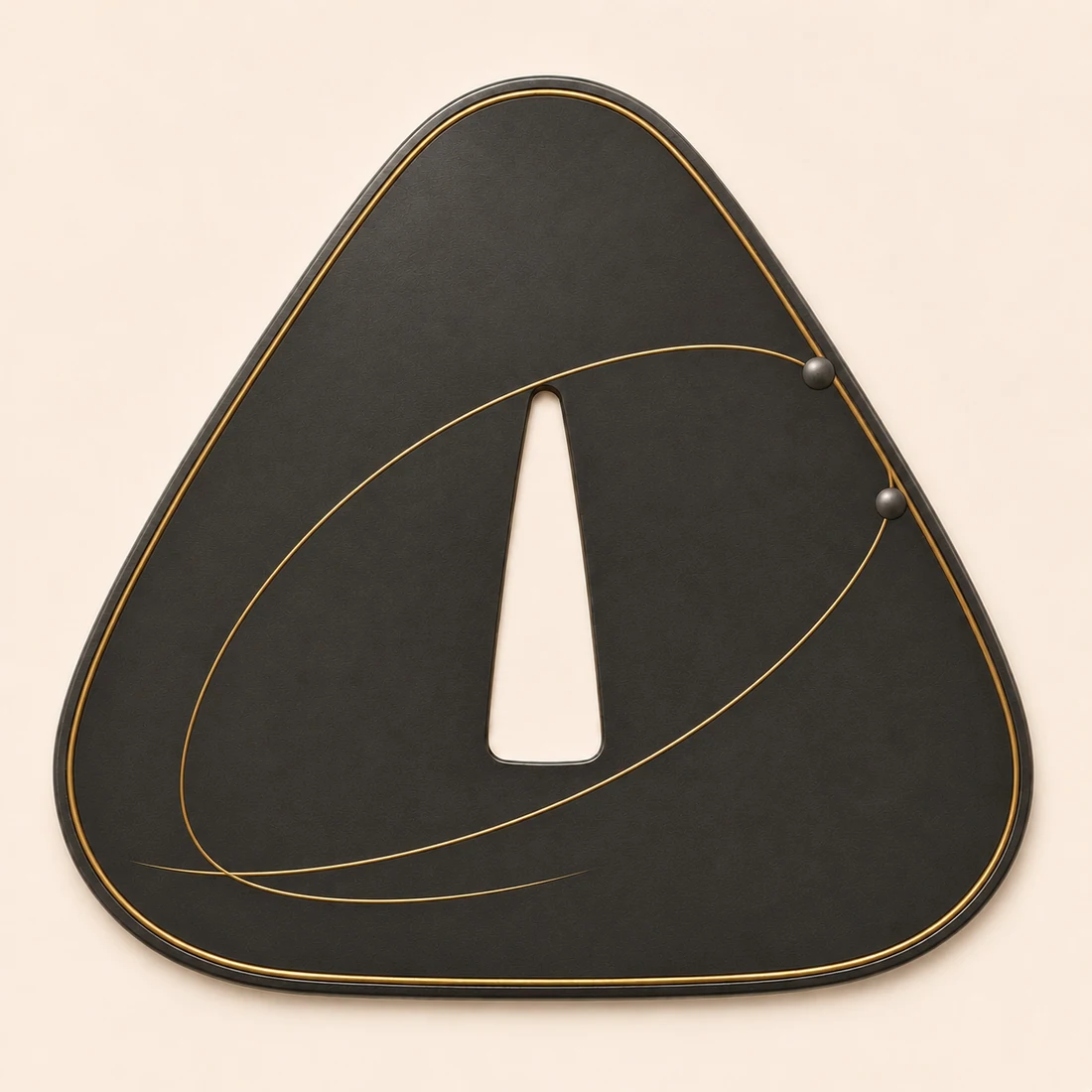
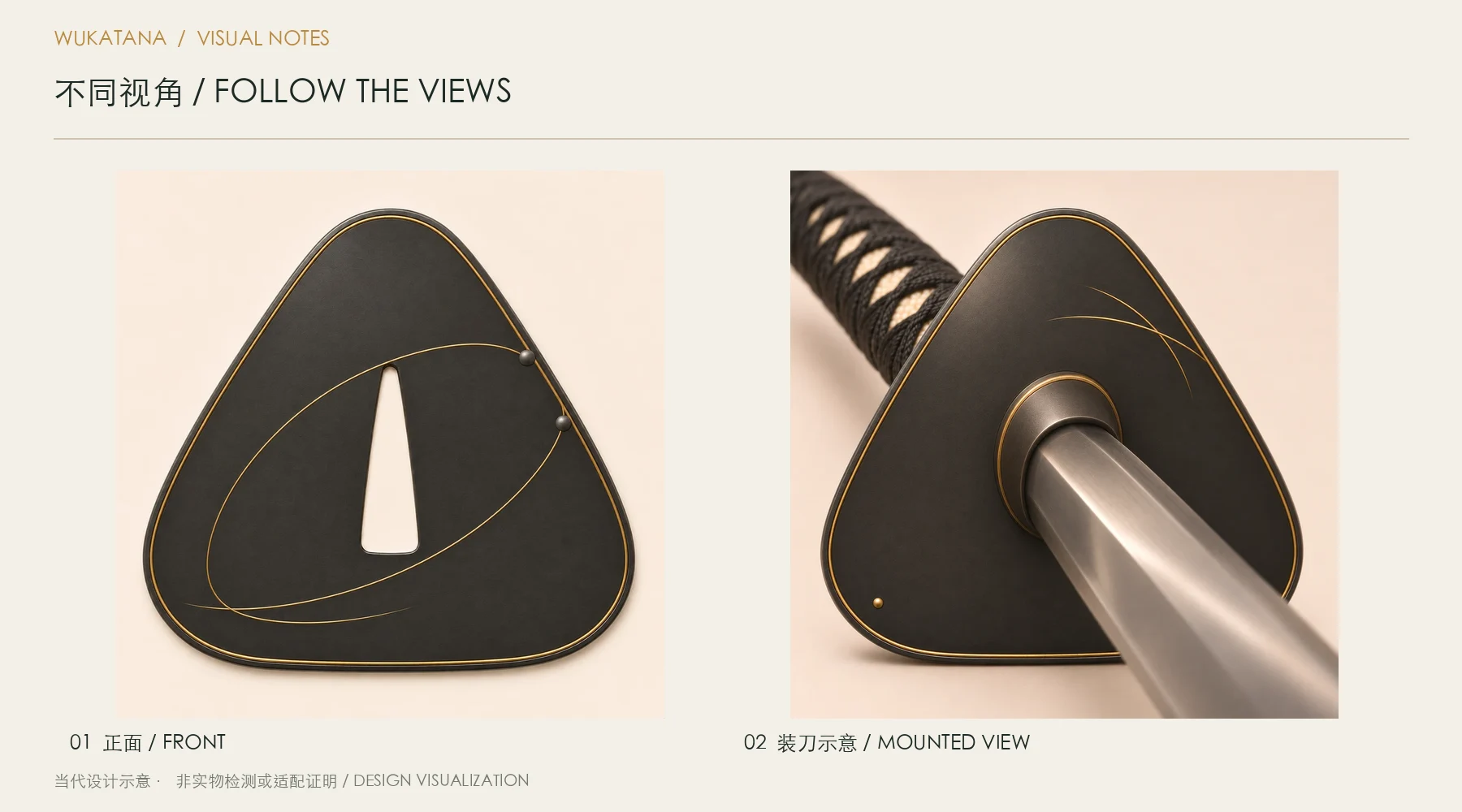
Three Stellar Orbits · Crossing Paths is cataloged as colored brass, with an original geometric outline form and fine engraved lines, sculpted relief, restrained color contrast as its decorative approach.
Stars move in the distance; their paths remain close at hand. Three Stellar Orbits · Crossing Paths uses colored brass. Two orbits meet at the lower left, pass around the central field and reach toward the upper right.
As a composition example, reduce this design to three levels: outer frame, central area, and principal motif. Any added detail should have a readable job, whether it strengthens a direction, explains a form, or contributes a clue to the subject. Detail without a job makes revision harder.
Second example: Three Stellar Orbits · Near Ring
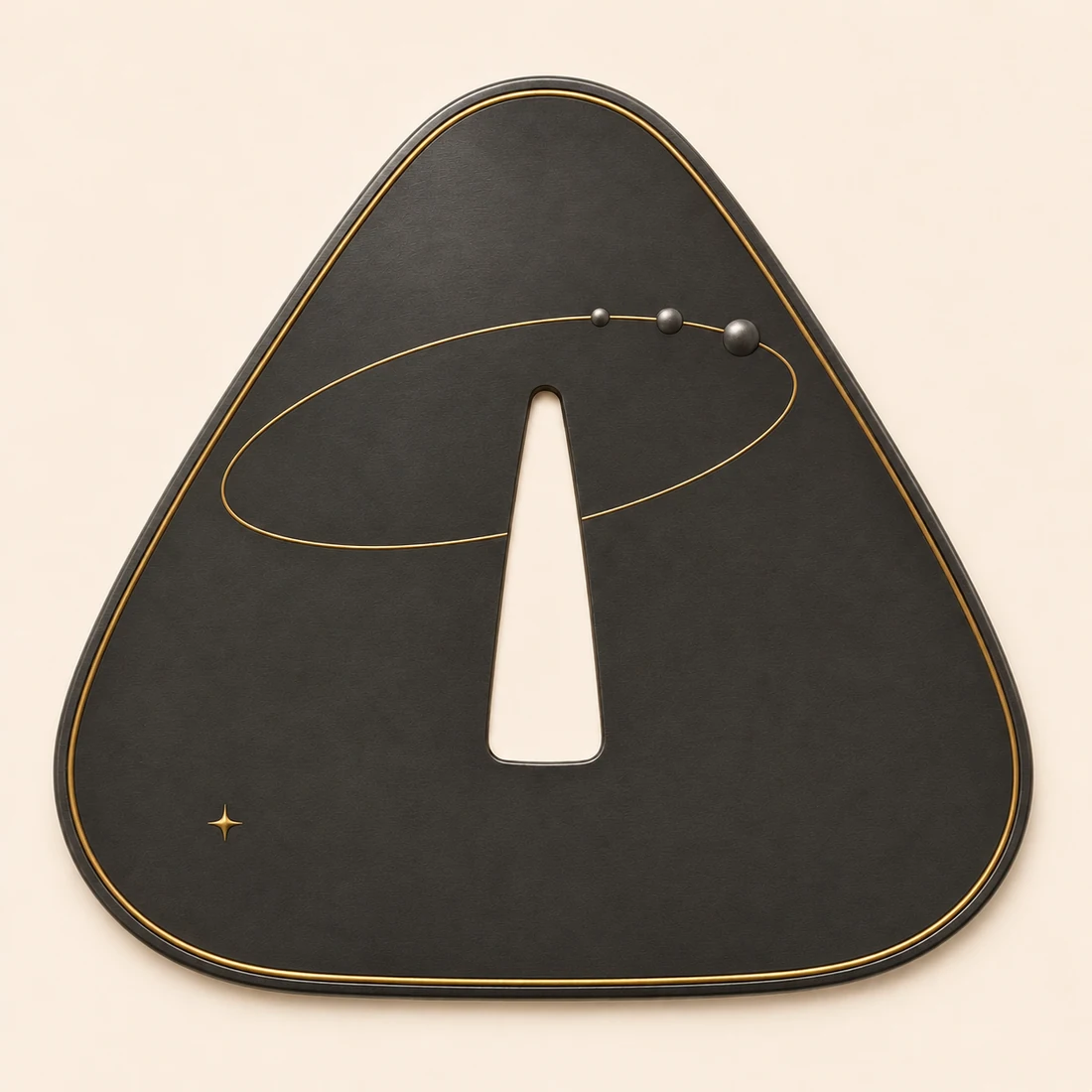
Three Stellar Orbits · Near Ring is cataloged as colored brass, with an original geometric outline form and fine engraved lines, sculpted relief, restrained color contrast as its decorative approach.
Stars move in the distance; their paths remain close at hand. Three Stellar Orbits · Near Ring uses colored brass. An elliptical orbit curves around the upper field, with three small stars following its path.
Read Three Stellar Orbits · Near Ring on its own terms before comparing it with the first example. Each design retains its cataloged material and composition. If material, outline, and subject change together, record those variables separately rather than attributing every visual difference to one factor.
Turn looking into a repeatable method
Read the main form without relying on its warm accents, then consider whether those accents are concentrated where they contribute most.
Begin with a low-detail silhouette and place the principal motif around the central mounting area. Check for congestion near the rim, then test the focus in a thumbnail. Include a mounted view at this stage: a composition that succeeds in isolation may need adjustment once the grip and adjacent fittings cover part of it.
Keep one clear outcome
For charcoal-colored brass, make the record specific to the two designs: mark the first detail you notice in Three Stellar Orbits · Crossing Paths, then identify a corresponding observation area in Three Stellar Orbits · Near Ring. Describe the shapes and relationships first, followed by the preference or question that needs to be resolved.
Write revisions as actions: reduce a line group, move a secondary motif, or retain a continuous interval of open ground. Change one class of relationship at a time and compare the same view again. This makes it possible to judge whether the revision solved the identified problem instead of merely creating a different picture.