Understanding Apparent Size And Confirmed Dimensions Through Visible Form
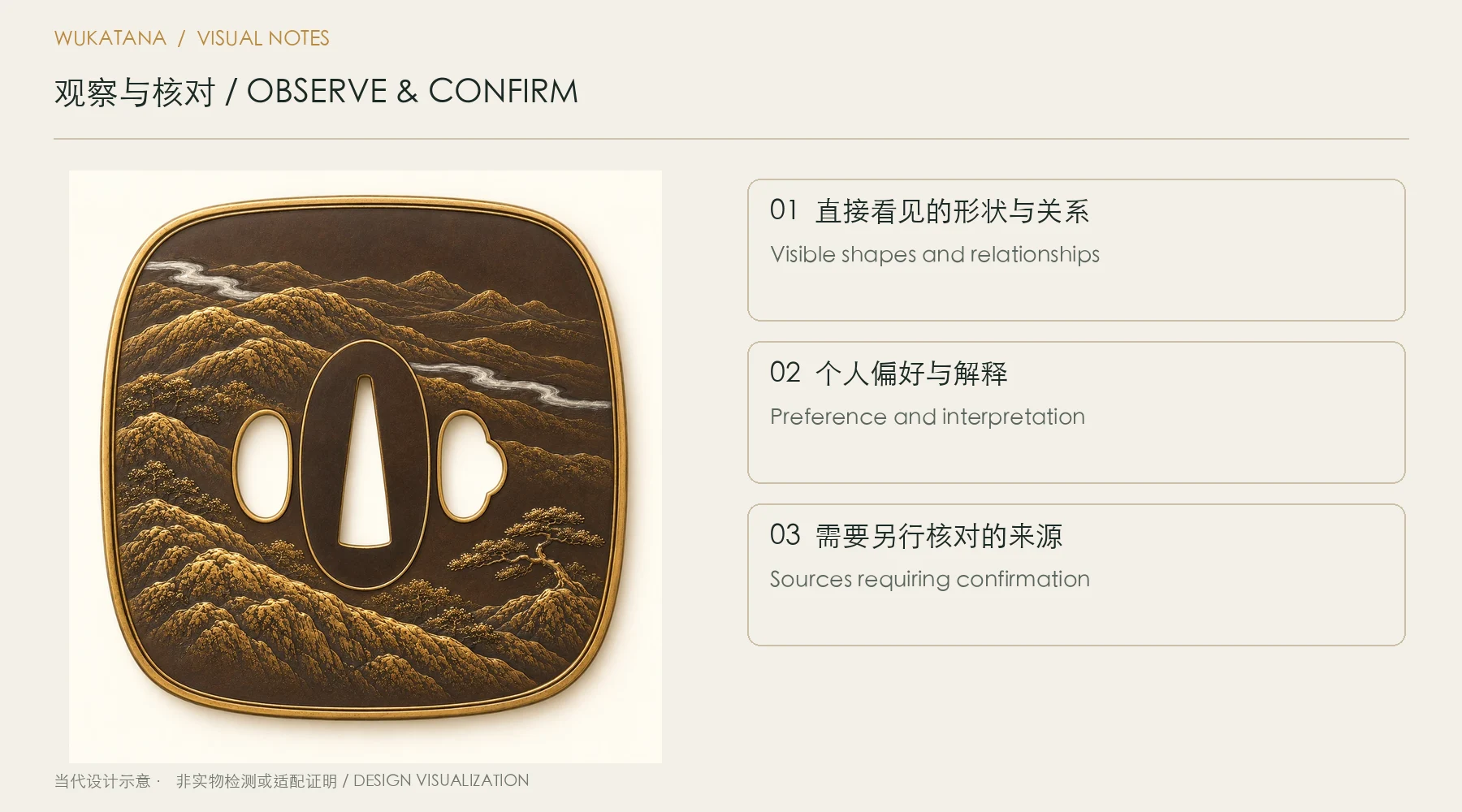
To examine apparent size and confirmed dimensions, begin with specific designs rather than a general style label. This article focuses on visual interpretation, using Five Peaks, One Horizon · Southern Mount Heng and Five Peaks, One Horizon · Mount Song to distinguish visible clues from the information that needs a separate check.
Define the question for this comparison
A reading of contemporary mountings can begin with visible shape, direction, and relationships. The subject name provides an entry point, but looking still means returning to the object: what has been emphasized, what has been omitted, and how attention moves between the clues that remain.
Apparent size is affected by framing and camera position and should not be used to infer physical dimensions. Keep visual proportion and confirmed measurements as separate parts of the record.
First example: Five Peaks, One Horizon · Southern Mount Heng
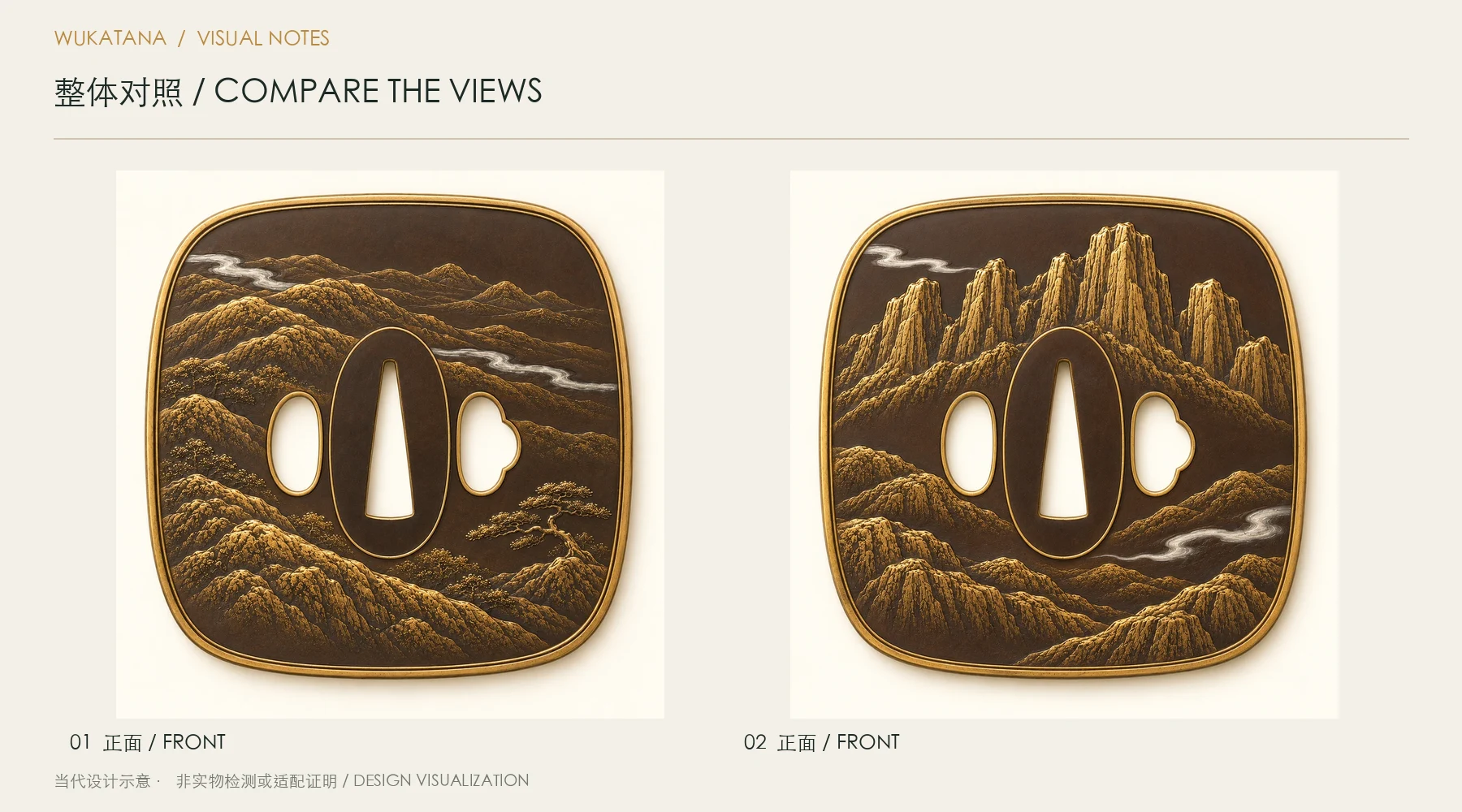
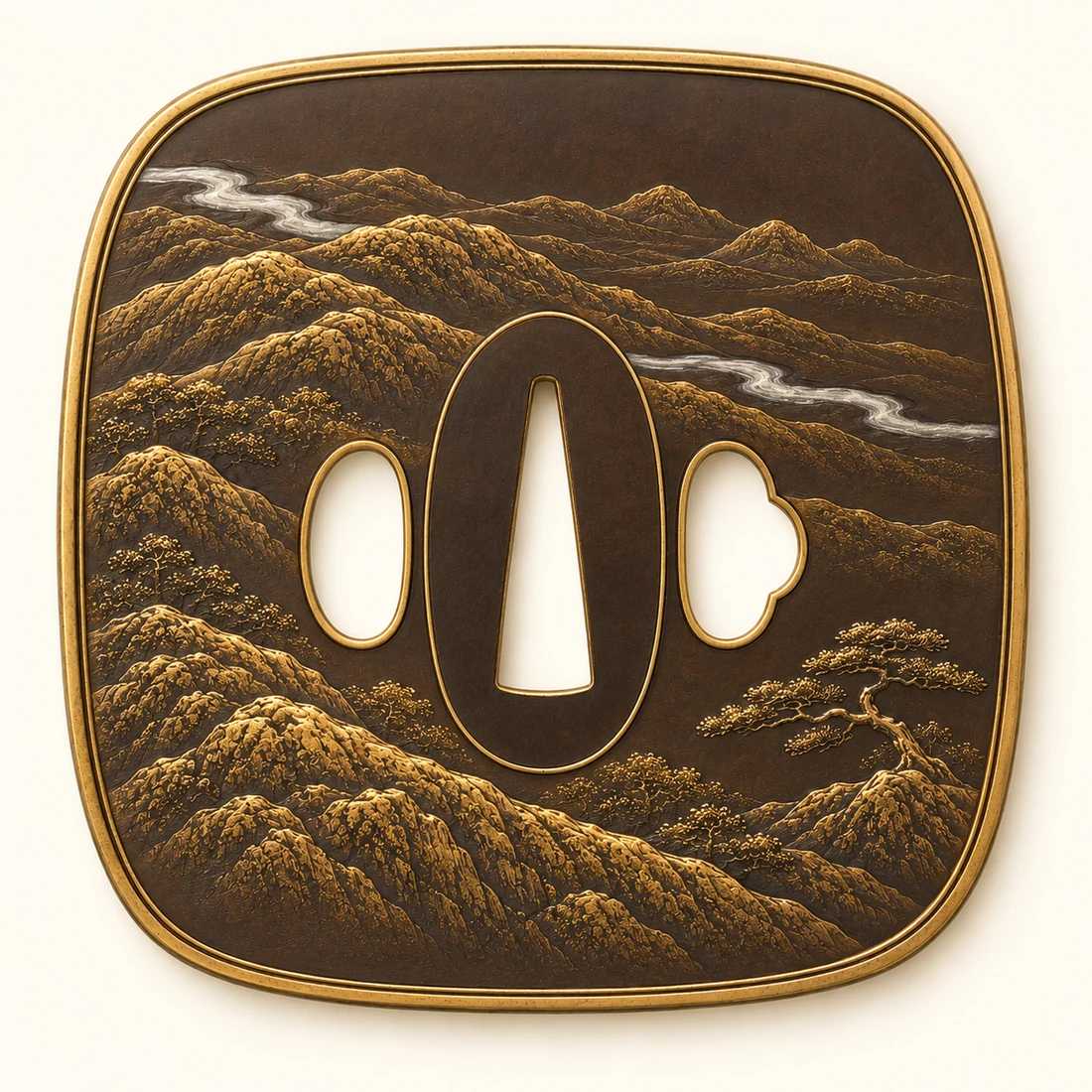
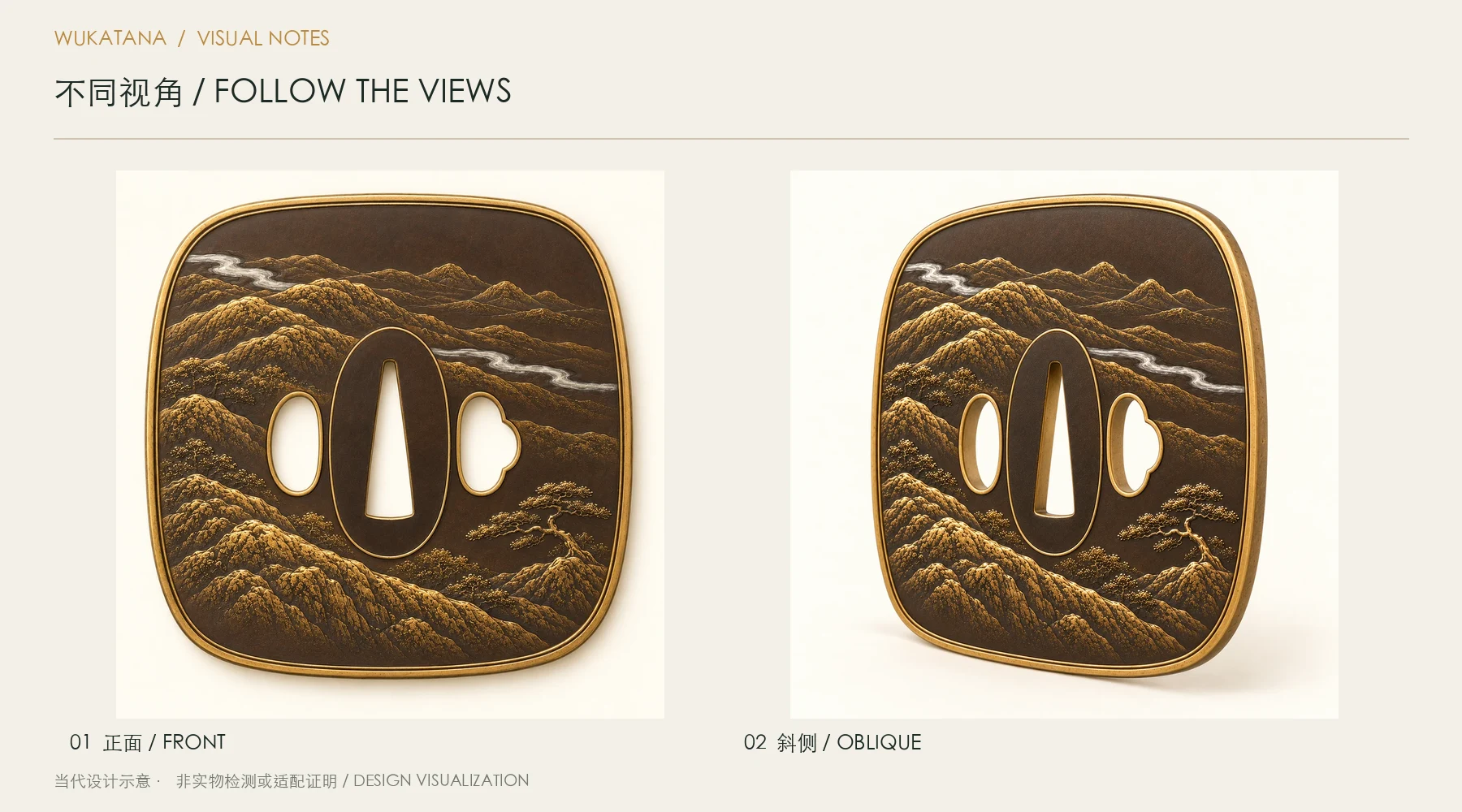
Five Peaks, One Horizon · Southern Mount Heng is cataloged as colored brass, with rounded square or polygonal form and fine engraved lines, sculpted relief, restrained color contrast as its decorative approach.
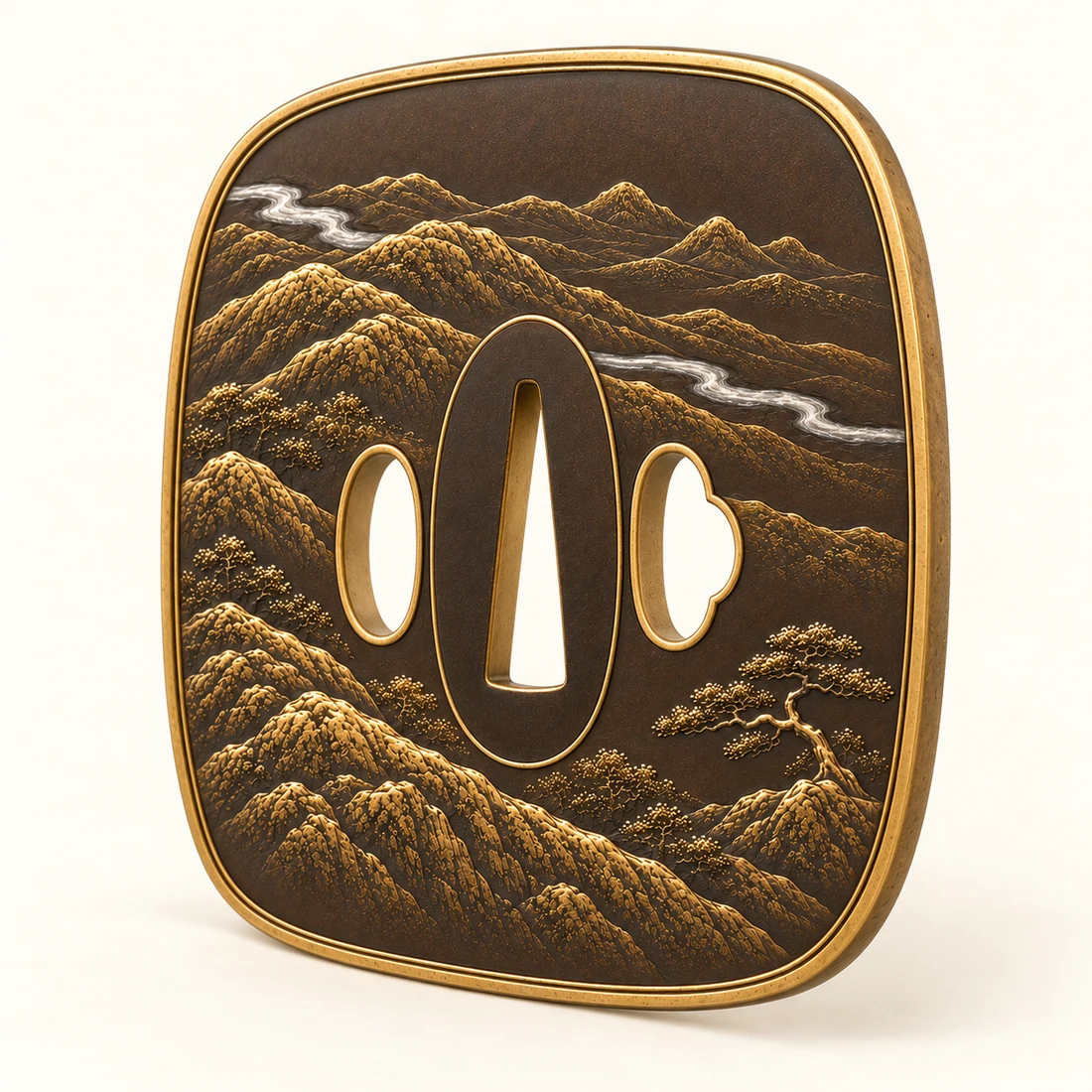
Near ridges, distant peaks, a changing horizon. Five Peaks, One Horizon · Southern Mount Heng develops a mountain landscape on deep-brown colored brass. Gentler ranges recede from the lower left toward the upper right, divided by thin mist, with a small pine resting in the lower-right field.
Describe this design in plain visual terms before attaching a date or school label. Pointing to motif placement, a turn in the rim, and an interval of open ground usually helps another person understand the observation more effectively than relying on adjectives such as “ancient” or “mysterious.”
Second example: Five Peaks, One Horizon · Mount Song
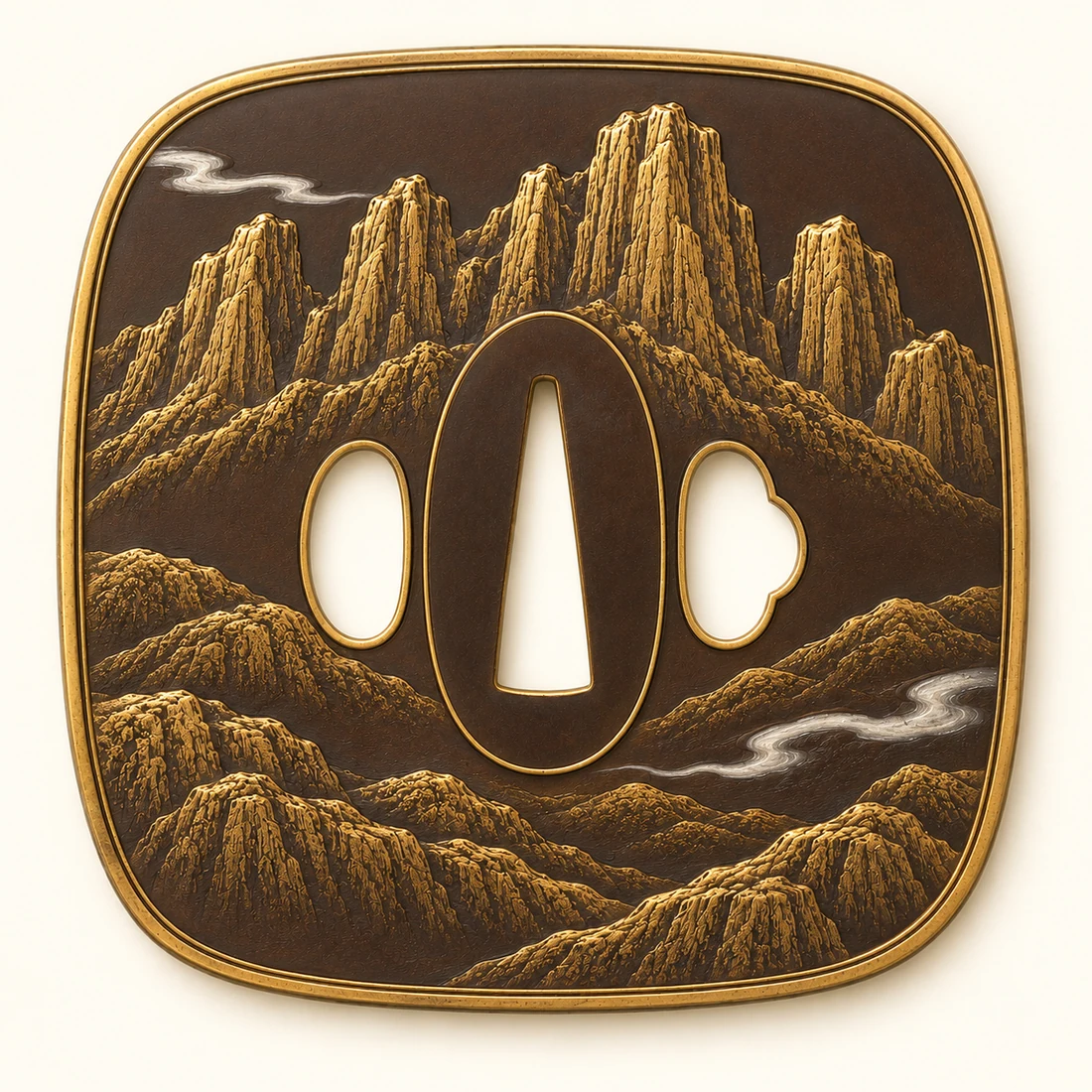
Five Peaks, One Horizon · Mount Song is cataloged as colored brass, with rounded square or polygonal form and fine engraved lines, sculpted relief, restrained color contrast as its decorative approach.
Near ridges, distant peaks, a changing horizon. Five Peaks, One Horizon · Mount Song develops a mountain landscape on deep-brown colored brass. A measured row of peaks spans the upper field, with upright rock lines answering folded ridges around the lower edge.
Read Five Peaks, One Horizon · Mount Song on its own terms before comparing it with the first example. Each design retains its cataloged material and composition. If material, outline, and subject change together, record those variables separately rather than attributing every visual difference to one factor.
Turn looking into a repeatable method
Compare shapes at the same displayed height while listing confirmed overall measurements and thickness separately. Leave unconfirmed fields blank.
Keep the subject name, visible form, and personal associations as separate notes. A contemporary design can support a clearly described individual response. A historical claim requires a further step: checking documents or museum records with a clear source. Similar-looking ornament alone cannot establish age, ownership, or a definitive meaning.
Keep one clear outcome
For apparent size and confirmed dimensions, make the record specific to the two designs: mark the first detail you notice in Five Peaks, One Horizon · Southern Mount Heng, then identify a corresponding observation area in Five Peaks, One Horizon · Mount Song. Describe the shapes and relationships first, followed by the preference or question that needs to be resolved.
Finish with a simple account of what you noticed first, how you followed the lines, and where you paused. Those observations can be checked against the image while leaving other readers room for a different response. The discussion stays grounded in the design rather than requiring everyone to accept one symbolic interpretation.